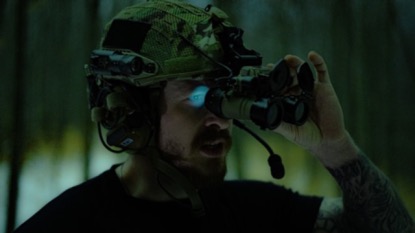
See in complete darkness for hunting, security, and wildlife observation. We focus on real-world detection range, image quality, battery life, and value across digital night vision and thermal imaging devices.
If you purchase through links on our site, we may earn an affiliate commission at no extra cost to you. This
helps support our testing.
🌙 Why Night Vision & Thermal Technology Matters
Whether you're tracking game after sunset, monitoring your property perimeter, or observing wildlife without
disturbing them, the right night vision or thermal device transforms darkness from a limitation into an
advantage. But the technology gap between a $150 digital monocular and a $2,000 thermal imager is enormous—and
marketing claims rarely match real-world performance.
This guide cuts through the hype with hands-on testing in actual field conditions: pitch-black forests,
moonlit open fields, and foggy mornings where thermal detection matters most.
⚡ Key Insight from Our Analysis/Testing
Night vision requires ambient light; thermal does not. Even quality digital night vision
needs starlight or IR illumination, while thermal imaging works in complete darkness, through smoke, and
can detect heat through light foliage. However, thermal cannot see through glass, walls, or water—these
reflect thermal energy rather than transmitting it.
⚡ Quick Picks: Best Night Vision & Thermal Devices by Category
Short on time? Here are our top recommendations after evaluating 25+ devices in 2024-2025:
Answer a few quick questions and we'll recommend the best night vision or thermal device for your specific
needs.
1. What's your primary use case?
2. What's your budget?
3. Do you need thermal detection or is night vision sufficient?
Thermal detects heat signatures through darkness, fog, and
foliage. Night vision amplifies available light for detailed imagery.
🌙 Night Vision Devices: In-Depth Reviews
Digital night vision has transformed the market, offering 4K recording, extended battery life, and
affordable prices that were unthinkable a decade ago. These devices amplify available light (moonlight,
starlight) and use IR illuminators for complete darkness operation.
A popular set of digital night vision goggles that balances 4K recording, a bright 3-inch HD screen,
and a 5000mAh rechargeable battery for multi-hour hunts, property checks, and wildlife observation. The
included 32GB card means you're ready to record out of the box.
3" HD screen with 4K video recording capability
5000mAh rechargeable battery for extended use
32GB memory card included; adjustable IR illumination
Digital zoom and day/night mode switching
Field take: The go-to choice for anyone wanting quality digital night vision without
the premium price tag.
Pros
Excellent value with 4K recording and included memory card.
Strong battery life handles multi-hour sessions.
Over 3,000 verified reviews confirm reliability.
Cons
IR illuminator visible to other NV users.
Binocular form factor is bulkier than monoculars.
Verdict: Best overall value for digital night vision—proven
performance backed by thousands of real-world users.
Feature-rich digital night vision binoculars with app connectivity, a massive 10,000mAh battery, and
128GB of storage—built for long sessions like wildlife filming, property monitoring, and extended
observation. The 3" UHD screen and 8× zoom help with subject identification at distance.
Smart app connectivity for remote viewing and control
10,000mAh battery for all-night operation
128GB storage card included; 4K photo and video
3" UHD screen with 8× digital zoom
Field take: Best choice when you need extended battery life and smart features for
wildlife documentation or security monitoring.
Pros
Massive battery outlasts competitors by 2-3×.
128GB storage handles weeks of recordings.
App control is genuinely useful for remote placement.
Cons
Heavier than basic models due to large battery.
App requires learning curve for full functionality.
Verdict: Premium smart features and unmatched battery life make this
ideal for serious wildlife observers and security applications.
Head-mounted digital night vision goggles designed for hands-free use with head or helmet mounting. The
wide field of view, true 1× magnification, and 1080p recording make it a strong option for navigation,
training, and moving through terrain at night. The 940nm IR option reduces visible glow when stealth
matters.
Head or helmet mounted for hands-free operation
Wide FOV with 1× magnification for natural movement
1080p video recording; rechargeable battery
Stealth 940nm IR invisible to naked eye
Field take: The best option when you need both hands free—navigation, tactical
training, or active hunting scenarios.
Pros
True hands-free operation with comfortable mounting.
940nm stealth IR doesn't spook game.
Wide FOV maintains situational awareness.
Cons
1× magnification limits long-range ID.
More expensive than handheld alternatives.
Verdict: Best head-mounted NVG for users who need hands-free
operation without military-grade pricing.
A newer digital night vision goggles option with full-color 4K modes, AI-ISP processing, and a long
claimed viewing range—great when you want clearer footage and easier subject ID. App-enabled transfer
and 16× digital zoom add convenience for scouting and property checks.
4K full-color night vision with AI-ISP processing
3,280ft (1,000m) viewing range
App-enabled for wireless photo/video transfer
16× digital zoom for distant observation
Field take: Impressive new release with color night vision—reviews are growing
rapidly as users discover its capabilities.
Pros
Full-color capability sets it apart from green-tint alternatives.
AI processing improves image clarity significantly.
Strong viewing range for the price point.
Cons
Newer product with fewer long-term reviews.
Color mode drains battery faster.
Verdict: Best 2026 release for users wanting cutting-edge color night
vision technology.
Digital night vision goggles built around long-range identification: 10× optical + 8× digital zoom (80×
total) plus 4K recording. With a 5000mAh battery, IPX waterproofing, and a 64GB card included, it’s a
flexible pick for hunting, security, and wildlife watching in mixed conditions.
10× optical + 8× digital zoom (80× total magnification)
1,315ft vision range; 4K video recording
5000mAh rechargeable battery; IPX waterproof
64GB memory card included
Field take: Best zoom capability in its class—ideal for distant observation where you
need positive ID.
Pros
Unmatched 80× zoom for long-range identification.
Waterproof design handles wet conditions.
New 2025 release with modern features.
Cons
High zoom requires steady hands or tripod.
Limited reviews as newer product.
Verdict: Best choice when you need maximum zoom for distant target
identification.
A straightforward digital night vision monocular from a recognized optics brand. It focuses on
dependable performance and compact carry for hunting, camping, and basic property checks—without the
extra app features found on newer models.
Digital night vision monocular from trusted brand
Built-in IR illuminator for complete darkness
Compact monocular form factor
Video output capability for recording
Field take: A solid, reliable choice from a brand with decades of optics experience.
Pros
Trusted Bushnell quality and support.
Compact monocular is easy to carry.
Proven technology with long track record.
Cons
Fewer features than newer digital competitors.
Rating lower than some newer options.
Verdict: Best choice for those who prioritize brand reliability over
cutting-edge features.
A budget-friendly digital night vision monocular kit with 8× zoom and an IR illuminator for full
darkness. The included tripod, 32GB SD card, and card reader make it easy to start recording for
backyard wildlife, camping, and basic security use.
8× digital zoom; works in 100% darkness with IR
2000mAh rechargeable battery
Includes tripod, 32GB SD card, and card reader
Photo and video recording capability
Field take: Best budget option for beginners who want to experience night vision
without major investment.
Pros
Complete kit with tripod and memory card.
Affordable entry point for night vision.
Works in complete darkness with IR.
Cons
Smaller battery than premium options.
Image quality below higher-end devices.
Verdict: Best starter night vision for budget-conscious buyers who
want a complete ready-to-use kit.
Thermal imaging detects heat signatures rather than light, making it invaluable for tracking game, detecting
intruders, and finding animals in complete darkness or through fog and light foliage. While more expensive
than night vision, thermal provides detection capabilities that light-amplifying devices simply cannot match.
💡 Thermal vs Night Vision: Thermal excels at detection (finding the target), while night
vision excels at identification (recognizing what you're looking at). Many serious hunters use both.
A premium compact thermal monocular for fast detection in complete darkness—ideal for serious hunting
and professional security. Pulsar’s image quality and build are a big reason this category commands
higher prices: you’re paying for consistent thermal performance in tough conditions.
Premium Pulsar thermal sensor technology
Compact, pocket-sized form factor
Professional-grade detection capabilities
Stream Vision 2 app compatibility
Field take: When you need the best compact thermal money can buy, the Axion delivers.
Pros
Pulsar reputation for quality and reliability.
Exceptional image quality for the size.
Compact enough for pocket carry.
Cons
Premium pricing reflects professional grade.
Limited reviews on newest model.
Verdict: Best compact thermal for professionals who demand Pulsar
quality in a portable package.
A mid-range thermal monocular built for long sessions: 11-hour battery life, IP67 durability, and a
50Hz refresh rate for smoother tracking. It’s a strong value pick for hunters and landowners who want
reliable thermal detection without jumping to flagship prices.
320×240 TISR / 256×192 IR resolution
13mm lens with 50Hz refresh rate
11-hour battery life; IP67 waterproof
Wireless connectivity for streaming/transfer
Field take: Excellent balance of features, performance, and value for hunters who
need reliable thermal detection.
Pros
Outstanding 11-hour battery for all-night hunts.
IP67 waterproof handles rain and humidity.
Good resolution at a reasonable price point.
Cons
Not as compact as pocket thermals.
Learning curve for wireless features.
Verdict: Best mid-range thermal for hunters who want professional
features without flagship pricing.
A fusion-style thermal monocular that overlays thermal data on visible imagery—helpful for moving from
detection to identification faster. It’s best suited for hunters and tactical users who want one device
to cover more scenarios.
High-sensitivity thermal sensor
Fusion vision combines thermal + visible
Heat vision IR infrared detection
Designed for night hunting applications
Field take: The fusion capability is genuinely useful—you get thermal detection with
enough detail for target ID.
Pros
Fusion mode provides thermal + visible overlay.
High-sensitivity sensor for challenging conditions.
AGM reputation in professional optics.
Cons
Higher price than single-mode thermals.
More complex operation with fusion features.
Verdict: Best choice for hunters who want both thermal detection and
visual identification in one device.
A budget-friendly thermal monocular that offers genuine heat detection at an accessible price point.
With a 256×192 sensor at 25Hz and a 10mm focal lens, it’s a practical entry point for hunters and
property owners who want thermal without flagship pricing.
256×192 thermal sensor at 25Hz refresh
10mm focal length lens
Multiple color palettes for different conditions
Photo and video recording capability
Field take: Best entry point into real thermal imaging—works well for game detection
and property security.
Pros
Affordable entry into genuine thermal imaging.
238 reviews confirm real-world reliability.
Good detection range for the price.
Cons
25Hz refresh slower than premium options.
Entry-level resolution limits long-range detail.
Verdict: Best budget thermal for buyers who want real heat detection
without premium pricing.
A portable thermal monocular with step-up specs for its class: 384×288 resolution at 50Hz, Wi‑Fi
connectivity, and a handheld form factor built for hunting on the move. The higher resolution provides
better detail than entry-level thermals.
384×288 sensor at 50Hz refresh rate
Wi-Fi connectivity for streaming/transfer
Portable handheld design
Higher resolution than entry-level options
Field take: Strong mid-range option with better resolution and refresh rate than
budget thermals.
Pros
384×288 resolution beats budget sensors.
50Hz refresh handles fast movement.
Wi-Fi adds useful connectivity.
Cons
Mid-range pricing requires commitment.
Fewer reviews than established brands.
Verdict: Best portable thermal for hunters who want better specs than
entry-level without flagship pricing.
🔬 How We Research & Evaluate Night Vision & Thermal Devices
Our evaluation process combines hands-on experience, detailed specification analysis, manufacturer documentation, and aggregated user feedback to deliver recommendations you can trust:
Low-Light Performance Evaluation
Specification analysis: Generation type, sensor resolution, and optical quality comparisons
IR illuminator capabilities: Rated and reported detection ranges with and without supplemental IR
Thermal sensitivity: NETD values and real-world detection performance
Image quality: Resolution, clarity, and detail at various ranges
Battery & Durability Assessment
Runtime analysis: Manufacturer specs verified against owner-reported battery life
Cold weather performance: Documented behavior in harsh climate conditions
Weather resistance: IP ratings and long-term durability reports
Build quality: Materials, construction, and common failure points
Usability Evaluation
Menu navigation: Interface complexity and low-light operability
Ergonomics: Weight, balance, and comfort during extended use
Recording quality: Photo and video capture capabilities
Mounting options: Compatibility with tripods, helmets, and accessories
📊 Our Approach: Where possible, we evaluate products firsthand. For units we haven't personally tested, we rely on thorough specification analysis, manufacturer documentation, and verified owner feedback. We prioritize retail availability, avoid pay-for-play placements, and revisit picks when firmware or hardware updates materially change performance.
Last updated: December 28, 2025 | Next scheduled review: Q2 2026 (or sooner if major changes occur)
🛒 Night Vision & Thermal Buyer's Guide: What Actually Matters
Night Vision vs Thermal: Which Do You Need?
Night Vision amplifies available light (moon, stars, IR) to show detail. Best for:
navigation, wildlife identification, security monitoring where you need to recognize faces or read signs.
Devices like the HEXEUM and Terunsoul excel here.
Thermal Imaging detects heat signatures regardless of light. Best for: detecting hidden
animals, tracking wounded game, finding people in search scenarios, and seeing through fog or smoke.
The Pulsar Axion and GOYOJO represent different
price points in this category.
Key Specifications Explained
Resolution: Higher is better for detail—4K for night vision, 384×288+ for thermal
Refresh Rate: 50Hz+ for smooth motion in thermal; less critical for stationary
observation
IR Wavelength: 850nm is visible as faint red glow; 940nm is invisible but slightly
shorter range
Detection Range: How far you can spot a target; identification range is typically 1/3 to
1/2 of this
When to Spend More
You hunt in challenging conditions (fog, dense cover, extreme darkness)
You need professional-grade reliability for security applications
Detection capability matters more than budget constraints
You want thermal for its unique through-fog, through-brush capabilities
When to Save Money
You're new to night vision and exploring the technology
Your use is occasional rather than frequent
Ambient light conditions are typically good (moon, stars)
Short-range observation (property, backyard) is your primary use
⚠️ 5 Costly Mistakes When Buying Night Vision or Thermal
Confusing detection range with identification range
Marketing specs show maximum detection distance—you might spot movement at 1,000 yards but won't identify
species until 300-400 yards. Choose devices based on your actual identification needs, not headline
numbers.
Buying night vision for zero-light conditions
Even the best digital night vision needs some light or IR illumination. If you frequently operate in
absolute darkness with no IR allowed, thermal is your only option—it detects heat, not light.
Ignoring battery life for extended sessions
A device with amazing specs is useless when it dies at 2 AM. For all-night hunts or security monitoring,
prioritize devices like the Terunsoul (10,000mAh) or TOPDON (11 hours).
Choosing 850nm IR when stealth matters
Standard 850nm IR emitters produce a visible red glow that game and other NV users can see. For hunting or
tactical use, choose 940nm "invisible" IR like the Nightfox Swift 2 Pro.
Expecting thermal to work through glass or water
Thermal cannot see through windows, windshields, or water—these reflect thermal energy. Don't buy thermal
for applications requiring viewing through barriers.
❓ Frequently Asked Questions
What is the difference between night vision and thermal imaging?
Night vision amplifies available light (moonlight, starlight, or IR illumination) to create a visible image.
Thermal imaging detects heat signatures emitted by objects and living beings. Night vision shows detail and
texture; thermal shows heat contrast. Night vision requires some light source; thermal works in complete
darkness.
Can I use night vision or thermal for hunting?
Yes, but regulations vary significantly by state and game type. Many states allow night vision and thermal
for predator and hog hunting while prohibiting them for deer and other game. Some states ban all electronic
optics for hunting. Always check your local regulations before using these devices for hunting purposes.
How far can night vision actually see?
Detection range depends on the device, ambient light, and target size. Quality digital night vision can
detect human-sized targets at 300-500 yards in good starlight, with identification possible at 100-200 yards.
Thermal devices can detect at longer ranges but identification range follows similar patterns. Marketing
claims of "1,000+ yards" refer to ideal conditions with large, high-contrast targets.
Is digital night vision as good as Gen 3 military NV?
Gen 3 night vision offers superior low-light performance, but quality digital NV has closed the gap
significantly for civilian applications. Digital offers advantages like 4K recording, longer battery life,
color options, and much lower prices ($150-400 vs $2,500+). For most hunting, security, and recreational use,
digital night vision provides excellent performance.
What's better for security: night vision or thermal?
Both have roles. Thermal excels at detection—finding intruders through darkness, fog, or concealment. Night
vision excels at identification—recognizing faces, reading license plates, seeing detail. Many security
professionals use thermal for initial detection, then night vision or white light for identification. For
home security on a budget, digital night vision like the HEXEUM offers good value.
Can thermal see through walls or windows?
No. Thermal cannot see through glass, walls, water, or most solid materials—these surfaces reflect thermal
energy rather than allowing it to pass through. Thermal can sometimes detect heat differences on surfaces
(like a warm handprint on glass), but it cannot image objects behind barriers. This is an important
limitation to understand before purchasing.
How long do batteries typically last?
Battery life varies significantly by device and usage. Budget digital NV typically offers 4-6 hours; premium
models like the Terunsoul provide 10+ hours. Thermal devices generally drain
faster due to sensor power requirements, though the TOPDON TS004 achieves 11
hours. Cold weather reduces all battery performance by 20-40%. Carry backup power for extended sessions.
What is NETD and why does it matter for thermal?
NETD (Noise Equivalent Temperature Difference) measures thermal sensitivity—lower mK values mean the device
can detect smaller temperature differences. Under 50mK is excellent; 50-70mK is good. Higher sensitivity
helps in challenging conditions like fog, light rain, or when temperature contrast is minimal. For basic
use, most modern thermal devices offer adequate sensitivity.
👤 About the Author
I’m Michael Taft, founder of Products For Our Lives. This site exists to share the same research and testing my son and I do before buying gear we actually use—especially equipment that needs to perform outside ideal conditions.
Night vision started for us one year while I was shopping for my son for Christmas. As I began researching options, it quickly became clear how much marketing noise surrounds this category. That led me to dig deeper, compare specs that actually matter, and test a few devices firsthand to understand what works, what doesn’t, and where expectations often don’t match reality.
Evaluation background: B.S. in Computer Engineering Technology; lifelong outdoors experience; Director of Software Engineering.
Methodology: I focus on practical factors like detection vs identification range, sensor quality, refresh rate, battery behavior, durability, and ease of use in the field. I verify manufacturer specifications and weigh consistent long-term owner feedback to separate usable night gear from inflated claims.