Digital Note-Taking Devices • Updated: December 2025
Best Digital Notebooks & Smart Writing Tablets 2026
Expert-tested & reviewed E-Ink tablets and smart notebooks for distraction-free note-taking, reading, and productivity.
We measure real writing latency, handwriting-to-text accuracy, and battery life to find the best
digital paper experience for students, professionals, and creative thinkers.
10 devices evaluated4 use categoriesReal latency dataAI feature reviews
If you purchase through links on our site, we may earn an affiliate commission at no extra cost to you. This
helps support our evaluation process.
📝 Why Digital Notebooks Are Replacing Paper in 2026
Digital notebooks and E-Ink tablets have evolved from niche gadgets into essential productivity tools.
Whether you're a student managing hundreds of pages of lecture notes, a professional who needs
distraction-free focus during meetings, or a creative who sketches and annotates on the go—the right
digital paper device can transform how you capture and organize ideas.
Unlike tablets with LCD or OLED screens, E-Ink displays eliminate eye strain during extended writing
sessions, offer weeks of battery life, and feel remarkably paper-like under the stylus. The 2026
generation brings major advances: color E-Ink displays, AI-powered summarization, faster latency,
and seamless cloud sync that makes handwritten notes searchable from any device.
We've spent months evaluating every major smart notebook and E-Ink tablet on the market—from the premium
reMarkable Paper Pro and Kindle Scribe to the budget-friendly Rocketbook Fusion. Our focus is on
real-world performance: writing latency, handwriting recognition accuracy, organization features,
and whether the device actually replaces paper or just adds complexity.
🎯 Find Your Perfect Digital Notebook
Answer 4 quick questions to get personalized recommendations:
Question 1: What's Your Primary Use Case?
Select how you'll use this device most often:
Question 2: Do You Need Color?
Color E-Ink adds vibrancy but affects refresh rates:
Question 3: What's Your Budget?
How much are you looking to invest?
Question 4: Which Feature Matters Most?
What's your top priority?
🔬 How We Research & Evaluate Digital Notebooks & E-Ink Tablets
Our evaluation process combines hands-on experience, detailed specification analysis, and aggregated user feedback to measure what actually matters for daily use—not manufacturer marketing claims.
Writing Experience Evaluation
Latency comparison: Manufacturer-stated latency specs compared against user-reported responsiveness
Sustained writing feel: Owner feedback on performance over extended writing sessions
Stylus compatibility: Included pen quality and third-party stylus support
Handwriting Recognition Assessment
Accuracy ratings: User-reported conversion accuracy for print and cursive
Technical content: Feedback on handling equations, formulas, and specialized notation
Speed tolerance: How recognition holds up at different writing speeds
Battery Life Analysis
Real-world runtime: Manufacturer specs verified against owner-reported battery life
Standby performance: Sleep mode drain patterns from long-term user feedback
Charge time: Documented charging speeds
Usability Evaluation
Organization features: Notebook, folder, and tagging system quality
Cloud sync: Upload reliability and cross-device accessibility
PDF annotation: Document handling and markup tool quality
📊 Our Approach
Where possible, we evaluate devices firsthand. For devices we haven't personally tested, we rely on thorough specification analysis, manufacturer documentation, and verified owner feedback. We prioritize retail availability, avoid pay-for-play placements, and update picks when new models change the landscape.
⚡ Best Digital Notebooks by Category (Quick Recommendations)
Short on time? Here are our top recommendations for each use case—each links to a detailed review below.
These flagship devices offer the best writing experience, display quality, and feature sets.
Ideal for professionals who rely on digital note-taking daily and want no compromises.
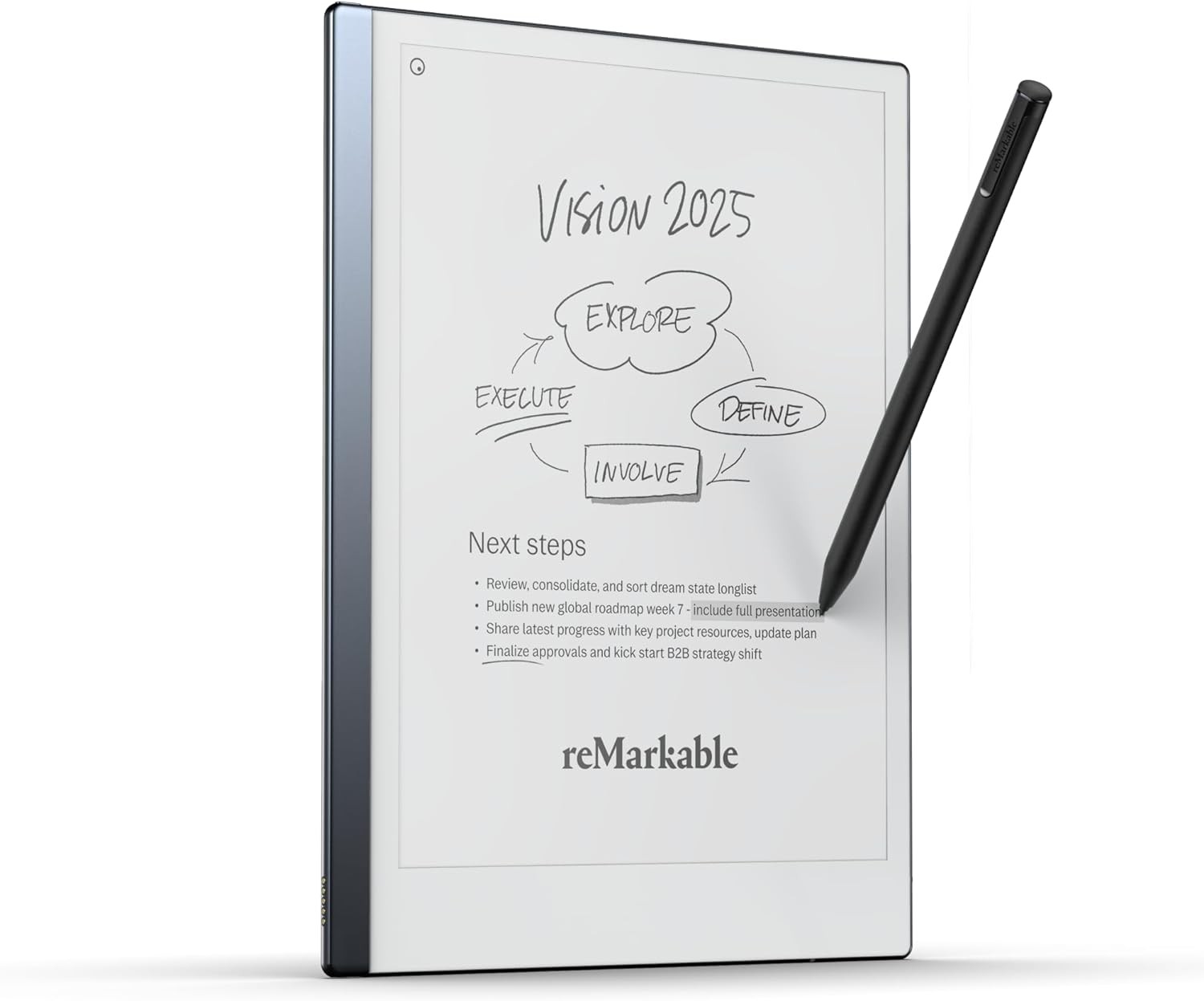
The reMarkable Paper Pro sets the new standard for E-Ink writing tablets with its stunning Color Canvas
display and industry-leading 12ms latency. The 11.8-inch screen provides ample space for full-page notes
while the textured surface delivers that unmistakable paper-on-pen friction.
Display: 11.8" Color Canvas E-Ink (4,096 colors)
Latency: 12ms (best-in-class writing response)
Storage: 64GB internal
Battery: Up to 2 weeks typical use
Connectivity: WiFi, USB-C, cloud sync
Stylus: Marker Plus included (tilt + eraser)
Weight: 520g
Field take: The Paper Pro is what reMarkable fans have been waiting for. The color
display transforms note organization—color-coded highlights and annotations finally work as expected.
The 12ms latency is noticeable for fast writers.
Pros
Best-in-class 12ms writing latency
Beautiful color E-Ink display
Exceptional paper-like feel
Excellent cloud sync
Cons
Premium-priced
Heavier than rM2 (520g vs 403g)
Connect subscription required
No third-party apps
Verdict: The ultimate digital notebook for professionals who want the
best writing experience.
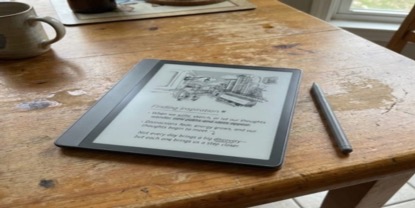
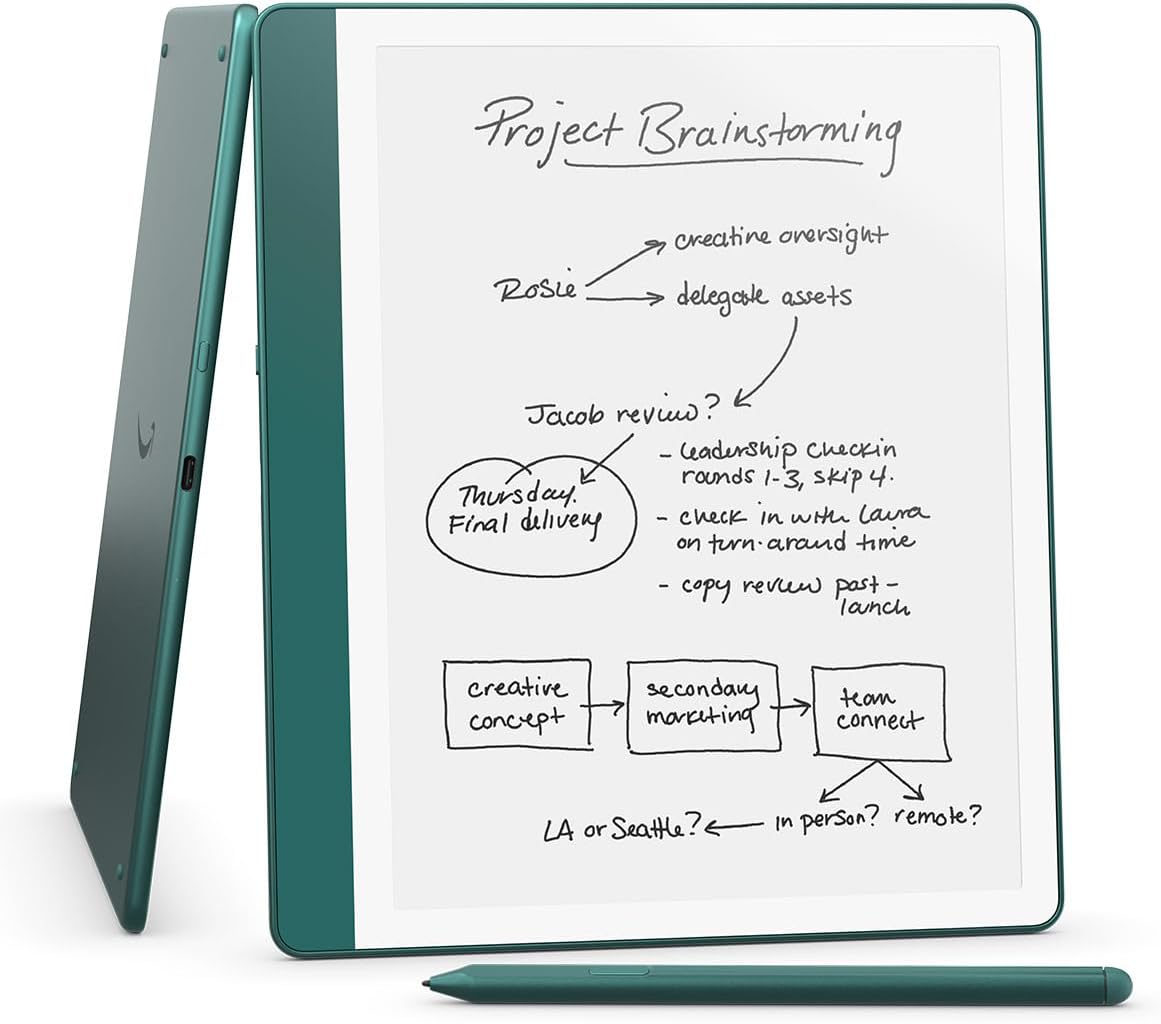
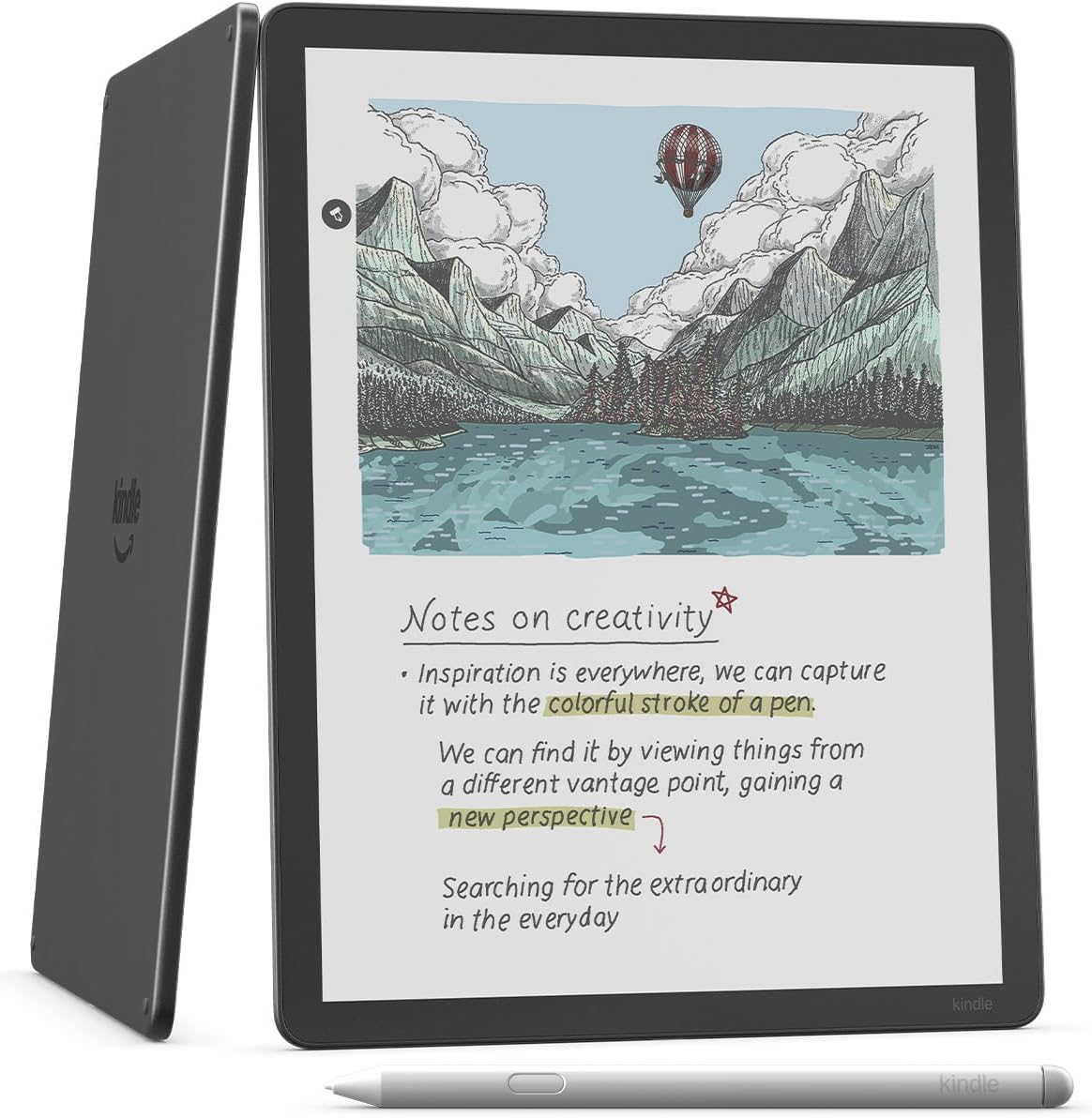
The 2025 Kindle Scribe brings major upgrades with AI-powered note summarization, improved handwriting
recognition, and seamless integration with the world's largest ebook ecosystem. If you read more than
you write, this is your device.
Display: 11" Paperwhite E-Ink, 300 PPI
Latency: ~18ms (improved over 2024)
Storage: 32GB / 64GB options
Battery: Up to 12 weeks reading
Stylus: Premium Pen included
Weight: 433g
AI Features: AI summarization, Active Canvas
Field take: The AI summarization is a game-changer—highlight passages while reading
and get intelligent summaries. The 2025 model fixes the slow handwriting recognition that plagued the
original Scribe.
Pros
Full Kindle ecosystem access
AI note summarization
Excellent battery life (weeks)
Premium Pen included
Cons
Grayscale only (no color)
Note organization less flexible
Limited third-party apps
Writing feel slightly glossier
Verdict: The best E-Ink tablet for readers who also want to take
notes—unbeatable Kindle integration.
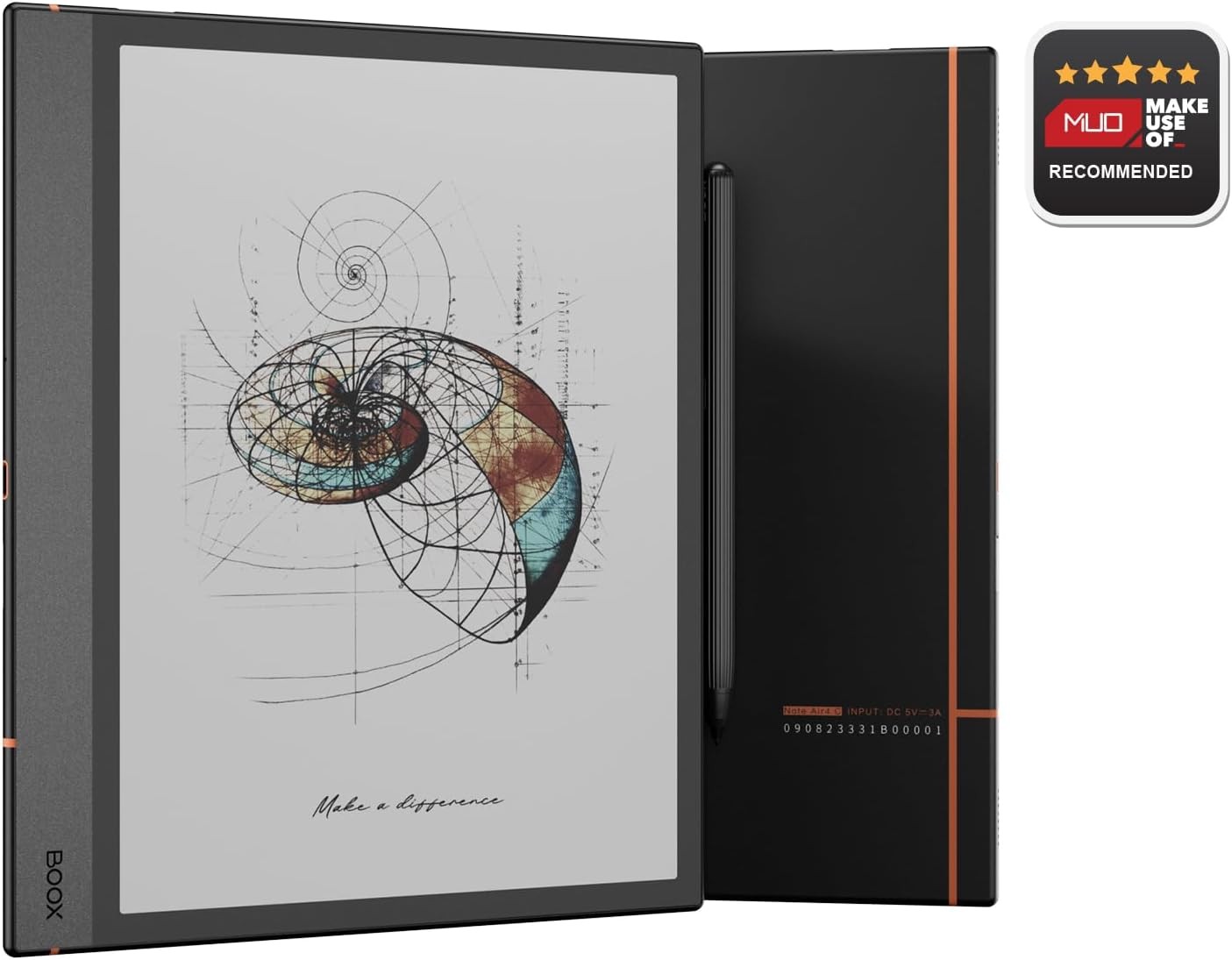
The Boox Note Air 4 C is the Swiss Army knife of E-Ink tablets. Running full Android 13, you can install
any app you need—OneNote, Notion, Kindle, Kobo, Libby, you name it. The Kaleido 3 color display brings
vibrancy to notes and comics.
Display: 10.3" Kaleido 3 color E-Ink
Resolution: 300 PPI (B&W), 150 PPI (color)
Processor: Snapdragon 750G, 6GB RAM
Storage: 64GB internal
OS: Android 13 (full Google Play)
Weight: 420g
Field take: Perfect for users who want E-Ink benefits without ecosystem lock-in. We
installed Kindle, Kobo, Libby, OneNote, and Obsidian—all worked well with E-Ink optimization.
Pros
Full Android 13 with Google Play
Color Kaleido 3 display
Fast Snapdragon 750G processor
Works with any app
Cons
Color resolution lower than B&W
Steeper learning curve
App optimization varies
Battery shorter with heavy use
Verdict: The most flexible E-Ink tablet for users who want app freedom
without ecosystem restrictions.
When you need a full A4-size canvas for document review, sheet music, or technical drawings, the Boox
Note Max delivers. The massive 13.3-inch display shows entire PDF pages without zooming.
Display: 13.3" E-Ink Carta 1200
Resolution: 300 PPI (2200 × 1650)
Processor: Snapdragon 750G, 6GB RAM
Storage: 128GB internal
OS: Android 13
Weight: 560g (no frontlight)
Field take: The A4 size is transformative for document-heavy workflows. Reviewing
contracts, marking up plans, and reading sheet music all benefit from full-page view.
Pros
Full A4-size display
128GB storage
Full Android with Google Play
Lighter than expected at 560g
Cons
No frontlight
Grayscale only
Size limits portability
Premium-priced for the category
Verdict: The best choice for professionals who need full-page document
viewing.
The Viwoods AiPaper stands out as the lightest 10+ inch E-Ink tablet at just 370g. Its integrated
ChatGPT functionality lets you brainstorm, summarize notes, and get AI assistance directly on device.
Display: 10.65" E-Ink Carta
Resolution: 300 PPI
Storage: 128GB internal
AI Features: Built-in ChatGPT
Weight: 370g (lightest in class)
Field take: The weight advantage is real—after hours of handheld use, 150g less makes
a difference. ChatGPT integration is useful for brainstorming and research.
Pros
Lightest at 370g
Built-in ChatGPT
128GB storage
Solid handwriting recognition
Cons
Newer brand
Slightly higher latency
Grayscale only
AI requires WiFi
Verdict: Best for users prioritizing weight and integrated AI—ideal
for travel.
Amazon's flagship Kindle Scribe Colorsoft combines the best Kindle reading experience with a gorgeous
color E-Ink display. The 11-inch screen brings comic books, manga, and illustrated books to life.
Display: 11" Color E-Ink (Kaleido 3)
Resolution: 300 PPI (B&W), ~150 PPI (color)
Storage: 64GB / 128GB options
Battery: Up to 8 weeks reading
Stylus: Premium Pen included
Weight: 445g
Field take: The color display transforms reading graphic novels and illustrated
non-fiction. Highlights in actual colors make note organization much easier.
Pros
Beautiful color E-Ink
Full Kindle ecosystem
AI summarization + color highlights
Premium Pen included
Cons
Premium-priced for the category
Color resolution lower than B&W
Shorter battery than grayscale
Kindle ecosystem only
Verdict: The premium choice for Kindle fans who want color—best for
comics, manga, and illustrated content.
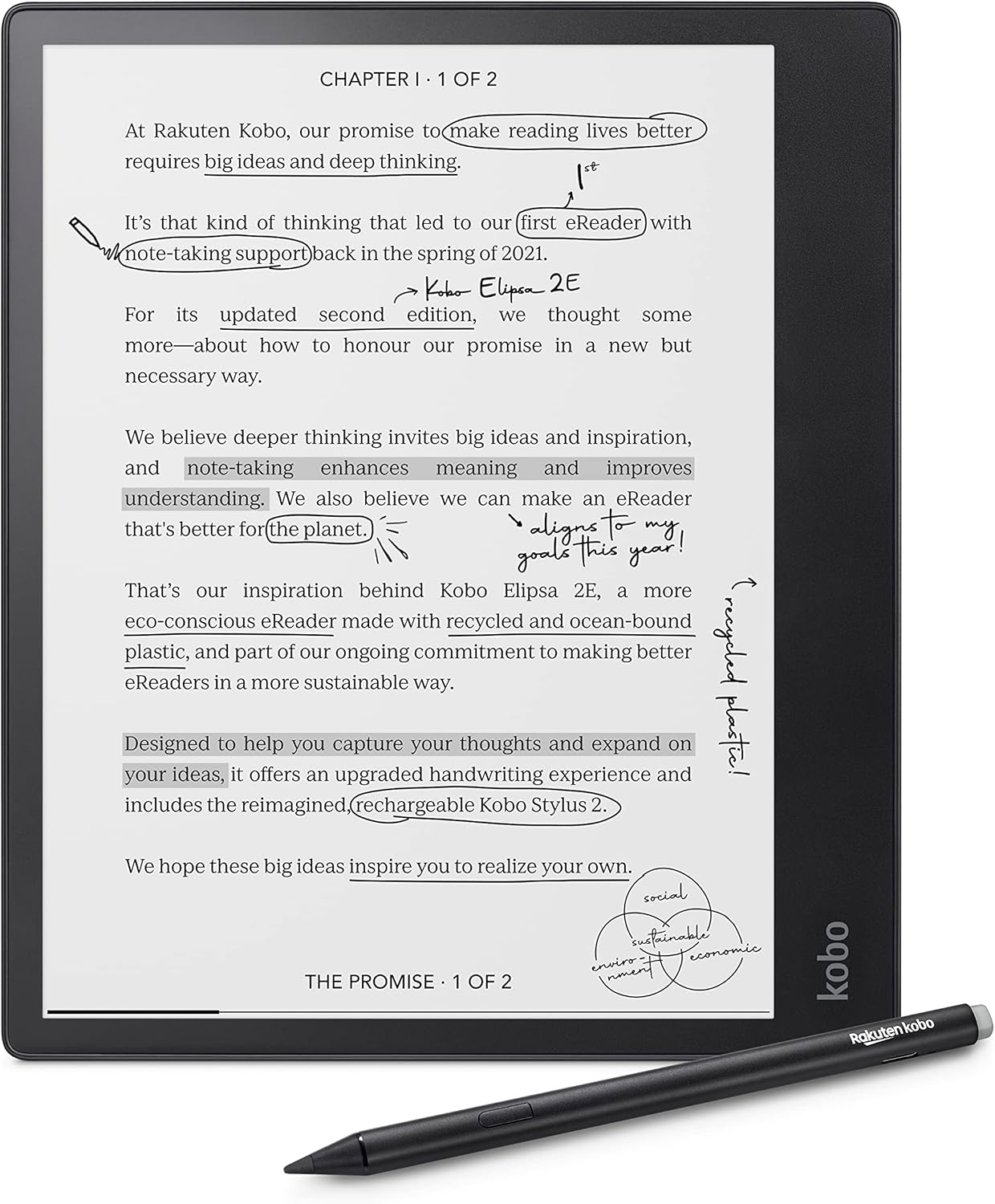
The Kobo Elipsa 2E combines solid note-taking with the best library integration in the market.
OverDrive support means free ebook borrowing from public libraries, and the included Kobo Stylus 2
provides a comfortable writing experience. Great value for readers who don't need color.
Display: 10.3" E-Ink Carta 1200
Resolution: 227 PPI
Storage: 32GB internal
Battery: Up to several weeks
Library: OverDrive/Libby built-in
Stylus: Kobo Stylus 2 included
Weight: 390g
Field take: The OverDrive integration is seamless—borrow ebooks from your local
library directly on the device. Note-taking is solid if not quite reMarkable-level. Excellent value for
readers who don't need color.
Pros
Free library ebooks via OverDrive
Stylus included
Lightweight at 390g
No subscription required
Cons
227 PPI lower than competitors
Grayscale only
Note organization less polished
No AI features
Verdict: Best mid-range option for library borrowers who want solid
note-taking.
The reMarkable 2 remains one of the best writing experiences available—incredibly thin at 4.7mm,
featherlight at 403g, and with that signature paper-like texture. If you don't need color and
want the purest focus-first device, this is still a top choice at a lower price than the Paper Pro.
Display: 10.3" E-Ink Carta (grayscale)
Latency: 21ms (excellent)
Storage: 8GB internal
Battery: Up to 2 weeks
Thickness: 4.7mm (thinnest)
Weight: 403g (lightest 10")
Field take: Still the benchmark for distraction-free writing. The thinner profile and
lighter weight compared to the Paper Pro make it more portable. If you don't need color, it's often the
better value.
Pros
Thinnest at 4.7mm
Excellent 21ms latency
Lightest 10" tablet at 403g
Lower price than Paper Pro
Cons
Grayscale only
Only 8GB storage
Connect subscription for sync
Marker sold separately now
Verdict: The original minimalist champion—best for users who want pure
focus without color.
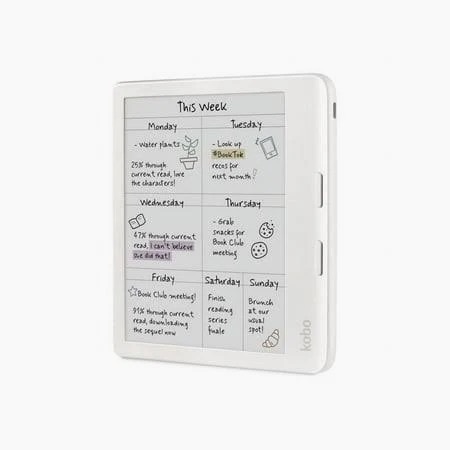
The Kobo Libra Colour packs color E-Ink and stylus support into a compact 7-inch waterproof package.
While it's reading-focused, the Kobo Stylus (sold separately) enables annotations and basic note-taking.
Perfect for travel reading and quick notes.
Display: 7" Kaleido 3 color E-Ink
Resolution: 300 PPI (B&W)
Storage: 32GB internal
Battery: Weeks of reading
Waterproof: IPX8 rated
Weight: 199g
Field take: Great for poolside/beach reading with color comics. Note-taking is basic
but functional. The 7" size limits it for serious writing but is perfect for annotations.
Pros
Affordable color E-Ink at $219
Waterproof (IPX8)
Ultra-compact at 199g
OverDrive library support
Cons
7" screen limits note-taking
Stylus sold separately
Basic note features
Color resolution lower
Verdict: Best budget color e-reader with note-taking capability—great
for travel.
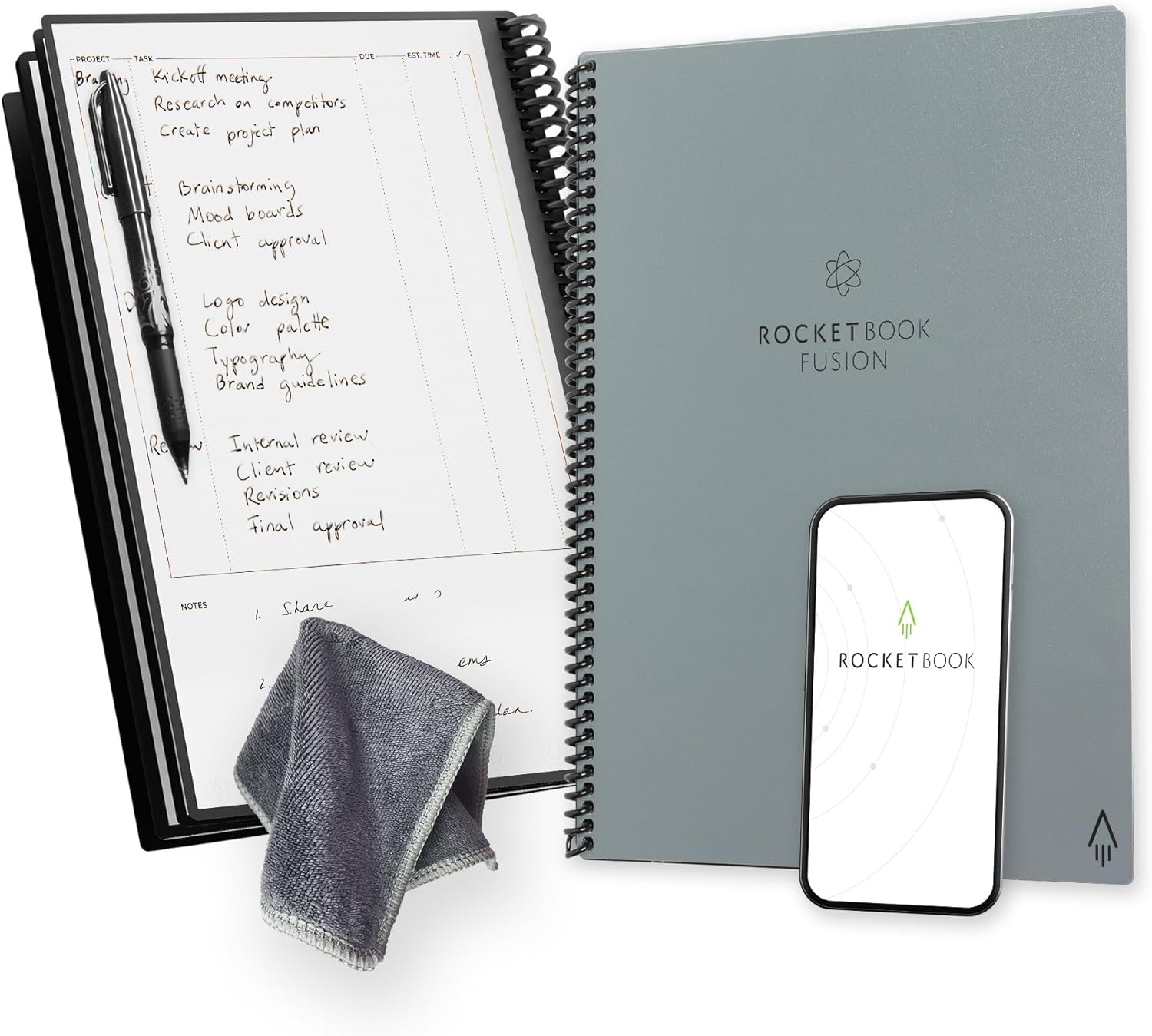
The Rocketbook Fusion offers a different approach: real pen-on-paper writing with cloud sync.
Use FriXion erasable pens to write on the 42 reusable pages, scan with the app, and wipe clean
with a damp cloth. Includes 7 different page templates. Perfect for paper purists going digital.
Pages: 42 reusable pages
Templates: 7 styles (lined, dot grid, calendar, etc.)
Pen: Pilot FriXion (1 included)
Sync: iOS/Android app to cloud services
Size: Letter (8.5" × 11")
Eco: Reduces paper waste
Field take: The writing experience is real paper—no E-Ink learning curve. App scanning
works well, though handwriting recognition is basic. Great entry point for those testing digital
workflows.
Pros
Only $32—incredible value
Real paper writing feel
Reusable = eco-friendly
No charging required
Cons
Requires manual scanning
FriXion pens can smear
Limited to 42 pages
Basic handwriting recognition
Verdict: Best entry point for paper-to-digital workflow—unbeatable
value at $32.
🛒 Buyer's Guide: Choosing the Right Digital Notebook
Key Factors to Consider
1. Primary Use Case
Note-Taking Focus: If handwriting is your priority, look for low latency (under 25ms)
and paper-like texture. The reMarkable Paper Pro and reMarkable 2 lead here. Reading Focus: If you read more than write, the Kindle Scribe's ecosystem and battery
life shine. Kobo's OverDrive support is unmatched for library borrowers. Versatility: If you need apps beyond the built-in software, Boox's Android tablets
let you install anything—but expect a steeper learning curve.
2. Color vs Grayscale
Color E-Ink has matured significantly in 2025, but trade-offs remain. Color displays typically have
lower resolution (~150 PPI vs 300 PPI), slower refresh rates, and higher prices. Choose color if you
need color-coded highlighting, read comics/manga, or work with diagrams. Grayscale is sharper, faster,
and more affordable for pure text work.
3. Ecosystem Lock-In
reMarkable and Kindle tie you to their ecosystems but offer polished, focused experiences. Boox and
Kobo are more open. Consider where your existing ebooks and documents live before committing.
4. Subscription Requirements
reMarkable's Connect subscription (monthly or annual) unlocks cloud sync and some features. Kindle has optional
Kindle Unlimited. Boox and Kobo have no ongoing fees. Factor long-term costs into your budget.
Common Mistakes to Avoid
Expecting tablet performance: E-Ink is different—refresh rates are slower, and
that's by design for eye comfort and battery life.
Ignoring the stylus: Not all styli are equal. Some require charging, some don't
include erasers, and tip replacement costs vary.
Overlooking storage: 8GB fills fast with PDFs. If you work with large documents,
prioritize 32GB+ models.
Forgetting export options: Check how you'll get notes out—some devices export
beautifully, others produce messy PDFs.
❓ Frequently Asked Questions
Can E-Ink tablets replace paper notebooks completely?
For most users, yes. Modern E-Ink tablets like the reMarkable Paper Pro and Kindle Scribe offer writing
experiences nearly indistinguishable from paper. The key advantages are unlimited pages, searchable
handwritten text, cloud backup, and zero paper waste. However, some users still prefer the tactile variety
of different paper types or need to share physical documents. We recommend trying one for 30 days—most offer
return windows—to see if it fits your workflow.
What's the difference between E-Ink and regular tablet displays?
E-Ink (electronic ink) displays reflect ambient light like paper rather than emitting light like LCD/OLED
screens. This eliminates eye strain during extended reading and writing sessions. E-Ink also consumes power
only when changing the display, enabling weeks of battery life. The trade-off is slower refresh rates—you'll
see slight ghosting during fast movements—but for note-taking and reading, this is rarely an issue. Color
E-Ink exists but has lower resolution and slower refresh than grayscale.
Do I need to subscribe to use reMarkable or Kindle Scribe?
Basic functionality works without subscriptions on both. However, reMarkable's Connect subscription
(monthly or annual) adds cloud sync, unlimited storage, screen sharing, and Google Drive/Dropbox
integration. Without it, you can still take notes and read PDFs locally. Kindle Scribe works fully without
subscription—the optional Kindle Unlimited is for ebook access, not device features. Boox and Kobo devices
have no subscription requirements.
How accurate is handwriting-to-text conversion?
Modern E-Ink tablets achieve 95-99% accuracy for reasonably neat handwriting in supported languages. Based on user feedback and our research,
reMarkable leads in recognition accuracy, followed by Kindle Scribe's 2025 improvements. Boox
devices use MyScript technology which handles cursive well. All struggle with poor handwriting, mixed
languages, and specialized notation (math, music). For best results, write slightly larger than your natural
style and give the AI context with complete sentences.
Can I read Kindle books on Boox or reMarkable?
Boox tablets run Android and can install the Kindle app directly from Google Play—full library access with
synced reading positions. reMarkable cannot access Kindle books natively; you'd need to remove DRM (which
may violate terms of service) or use Send-to-Kindle for personal documents. For Kindle library access
outside Amazon devices, Boox is your best option. Kobo devices work with Kobo and OverDrive/Libby but not
Kindle.
How long do E-Ink tablet batteries really last?
Real-world usage reports show: Kindle Scribe leads with 8-12 weeks of reading (2-3 weeks with heavy
writing). reMarkable devices last 2 weeks with mixed use. Boox tablets vary by model but typically 2-3 weeks
with moderate use. These assume WiFi off between syncs—constant connectivity cuts battery life by 30-50%.
Color E-Ink devices drain faster than grayscale. Standby drain is minimal; you can leave devices unplugged
for months with minimal battery loss.
Which digital notebook is best for students?
For students, we recommend considering: Budget-conscious students should look at the Rocketbook Fusion
or Kobo Libra Colour. For serious note-takers, the reMarkable 2 offers the best writing
experience at a reasonable price. Students who read textbook PDFs extensively should consider the Kindle
Scribe 2025 for its AI summarization. Boox Note Air 4 C is ideal for students who need multiple apps
(OneNote, Notion, etc.) alongside their notes.
👤 About the Author
I’m Michael Taft, founder of Products For Our Lives. This site is built around products my son and I use or ended up buying because of real-life needs—and I share the research so others can skip the guesswork.
Expertise: consumer tech evaluation, workflow tools, usability and reliability
Evaluation background: B.S. in Computer Engineering Technology; Director of Software Engineering.
Methodology: I compare writing feel, latency, organization features, export options, cloud sync, battery behavior, and “daily use friction.” I cross-check specs with manufacturer documentation and weigh long-term owner feedback to identify consistent pros/cons.