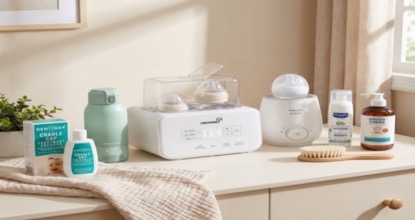
Best Baby Essentials for 2026: Wipes, Diaper Rash Creams, Cradle Cap Kits & Bottle Warmers
The baby essentials that actually matter in the first year—baby wipes, diaper rash creams, cradle cap treatments, and bottle warmers. We focus on pediatrician-trusted formulas, hypoallergenic ingredients, safe warming temperatures that protect breastmilk nutrients, and real parent feedback, so you spend less time researching and more time with your newborn.
If you purchase through links on our site, we may earn an affiliate commission at no extra cost to you. This helps support our research and testing and keeps this guide updated.
Why This Guide Exists (And Why It's Different)
I'll be honest—baby products aren't what this site was originally built for. Products For Our Lives started as a way to share what my son and I use to have fun and enjoy life together: handheld GPS devices for our hiking adventures, radar guns for tracking his pitching progress, walkie-talkies for camping trips.
So why baby essentials? My girlfriend's sister just had a baby, and she was completely overwhelmed trying to figure out which products were actually better versus just more expensive or better marketed. She'd spend hours reading reviews, only to end up more confused than when she started.
When she asked for help, I realized the same research methodology we use for outdoor gear—hands-on testing, cutting through marketing hype, focusing on what actually matters—could help new parents too. So this guide was born.
🎯 The Story Behind This Page
Want the full backstory? Read Why I Built the Baby Essentials Guide—including how we choose picks, how affiliate links work, and how to use this guide in 2 minutes.
What Makes Baby Essentials Different From Our Other Guides
Cradle cap affects up to 70% of newborns. While it's completely harmless, the right treatment can clear those stubborn flakes in 1-2 weeks—versus months of wondering if you're doing something wrong. Bottle warmers aren't just about convenience; they provide safe, even heating without the dangerous hot spots microwaves create.
⚠️ Critical Safety Note
Not all warmers are safe for breastmilk. Steam-only warmers can overheat above 104°F, destroying beneficial antibodies and proteins. If you're breastfeeding, look for warmers with gentle water bath modes—we call this out clearly in each review.
🎯 Find Your Perfect Baby Essential in 4 Questions
Not sure which product is right for you? Answer a few quick questions and we'll recommend the best option for your specific needs.
1. What type of product are you looking for?
2. What's your priority?
3. What's your budget?
4. Any special requirements?
⚡ Best Baby Essentials by Category (Quick Recommendations)
Need the fastest answer? Here are our top picks for every use case—each links to a detailed review below.
Our evaluation process combines hands-on experience, safety verification, and real parent feedback to deliver recommendations you can trust:
Cradle Cap Treatment Evaluation
Effectiveness analysis: Documented improvement timelines from verified parent reviews
Ingredient review: Pediatrician-approved active ingredients and safety for newborn skin
Ease of use: Application method, rinsing requirements, and realistic time commitment
Sensitivity tracking: Parent-reported reactions, redness, or irritation concerns
Real-world feedback: Patterns from families with varying cradle cap severity
Bottle Warmer Evaluation
Temperature accuracy: Manufacturer specs and user-reported consistency reaching body temperature
Hot spot concerns: Parent feedback on even vs. uneven heating
Breastmilk safety: Whether warmers stay below 104°F to preserve nutrients and antibodies
Warming speed: Documented times from fridge temperature to ready
Night feed reality: Parent reviews on one-handed, half-asleep usability
Baby Wipes Evaluation
Ingredient safety: Fragrance-free, alcohol-free, paraben-free, and phthalate-free formulations verified against manufacturer spec sheets
Dermatologist and pediatrician testing: Hypoallergenic claims cross-checked with brand documentation and third-party skin-patch data
Thickness & durability: Real-world feedback on tearing, bunching, and how many wipes a typical blowout actually requires
Moisture level: Balance between too-dry (ineffective) and dripping-wet (messy)—documented from long-term parent reviews
Sensitive-skin tracking: Reaction patterns reported by families with eczema, contact dermatitis, or fragrance sensitivities
Value per wipe: Cost-per-wipe across standard pack sizes, not headline sticker price
Diaper Rash Cream Evaluation
Active ingredient strength: Zinc oxide percentage (10%-40%) for treatment creams; petrolatum concentration for prevention ointments
Speed of relief: Documented improvement timelines from verified parent reviews on moderate-to-severe rashes
Barrier performance: How well the cream adheres through urine exposure and stays put between changes
Ease of application & removal: Thickness, spreadability, and whether it wipes off without scrubbing inflamed skin
Safety profile: FDA-approved skin-protectant status, absence of common allergens, and pediatrician recommendation patterns
Multi-use versatility: For ointments, suitability on cradle cap, chapped cheeks, minor scrapes, and dry patches
📊 Our Approach
Where possible, we evaluate products firsthand. For products we haven't personally tested, we rely on pediatrician guidance, manufacturer documentation, and verified parent feedback. We don't accept free products, don't sell placements, and base rankings on safety, effectiveness, and real-world usability.
Cradle cap (seborrheic dermatitis) affects up to 70% of newborns. While harmless, the right product can clear those stubborn, scaly patches in 1-2 weeks.
A pediatrician-designed cradle cap shampoo for babies that targets stubborn flakes with 0.95% pyrithione zinc. Fragrance-free and gentle enough for sensitive newborn scalps, it’s a strong “start here” option when you want fast, reliable improvement without a complicated routine.
Active Ingredient: Pyrithione Zinc 0.95%
Size: 8 fl oz
Fragrance: Fragrance-free
Results: 1-2 weeks
Field take: Fastest, most consistent results based on parent reviews.
Pros
Pediatrician-designed
Fast-acting
Fragrance-free
Safe for daily use
Cons
Higher price ($16)
May be overkill for mild cases
Verdict: Best medicated cradle cap treatment. If you want reliable, fast results, this is it.
A complete cradle cap kit that combines a softening mask, a flake-loosening spray, and a silicone brush to lift buildup without harsh scraping. It’s ideal for parents who want an easy step-by-step routine and visible results on thicker patches—especially when shampoo alone isn’t enough.
Kit Contents: Scalp Mask + Spray + Brush
Ingredients: Aloe Vera, Natural Oils
Hypoallergenic: Yes
Field take: Easy 3-step system perfect for first-time parents. Included brush makes flake removal much easier.
Pros
Complete system
Clean ingredients
Includes brush
Cons
Aloe scent not for everyone
Pricier than single products
Verdict: Best complete kit—everything you need in one package.
A gentle, tear-free foam cradle cap treatment that’s quick to apply and easy to rinse—great for daily bath time. The plant-based formula is a smart pick for mild cradle cap and sensitive skin, helping soften flakes and calm the look of dryness without heavy fragrance.
Ingredient: Natural Avocado Polyphenols
Plant-Based: 99%
Tear-Free: Yes
Field take: Foam formula easier to apply than shampoos. Great for natural ingredient priority.
A budget-friendly cradle cap shampoo for babies that keeps the routine simple: wash, soften, and gently brush. It’s a practical choice for mild cases or maintenance between stronger treatments—especially if you want a low-cost option that still feels parent-tested and dependable.
Price: Under $10
Scent: Pleasant, mild
Best For: Mild to moderate cases
Field take: Proves you don't need to spend a lot for effective treatment.
Pros
Under $10
Fast results
Pleasant scent
Cons
Not 100% natural
Not fragrance-free
Verdict: Best budget option—effective and affordable.
Baby Bottle Warmer, Grownsy 8-in-1 fast milk warmer with timer for breastmilk or formula. It fits two bottles and uses accurate temperature control with fast warming, thaw, keep warm (water bath), steam sterilizing, and baby food jar heating—ideal for night feeding and busy routines.
Fast warming: Claims 3–7 minutes to body temperature
Controls: Timer + adjustable temperature + auto shut-off
Design: Anti-scald basket, white, ~0.95 kg
Field take: The “do-it-all” combo is what makes this stand out: fast warming when baby is hungry, keep-warm for late-night feeds, plus steam sterilizing so you can skip a separate sterilizer.
Pros
Fits two bottles
Fast warm + thaw + keep warm
Timer + auto shut-off
Steam sterilizing + food jar heating
Anti-scald basket
Cons
Takes counter space
More modes = more buttons
Needs water refills for steam modes
Verdict: Best overall for most families—fast, flexible, and built around the routines that matter (night feeds, thawing, and “set it and walk away” timing).
A breastmilk-friendly bottle warmer designed around gentler, water-bath-style warming to help protect nutrients while reducing hot-spot risk. You also get a faster mode for formula, plus app control for hands-free night feeds—making it a strong choice for pumping, combo feeding, and routines that need consistency.
Modes: Dual (Steady + Quick)
Smart Features: Bluetooth App
Breastmilk Safe: Yes
Warming Time: 3-8 minutes
Field take: Clear winner for breastfeeding moms. Steady Warm designed to stay below 104°F threshold.
A fast, simple bottle warmer that uses circulating water to heat more evenly than basic steam warmers—helping reduce hot spots. It’s a great pick when speed matters (daycare mornings, hungry baby moments) and you want a set-and-go warmer with a helpful defrost mode.
Warming Time: 3 minutes (fastest)
Technology: Smart temp control
Hot Spots: None
Field take: Fastest warming reported—just 3 minutes from fridge temp. Smart sensing eliminates hot spots.
Pros
Fastest (3 min)
Zero hot spots
Trusted brand
Cons
No sterilizer
Beep could be quieter
Verdict: Best for speed—when 3 AM feeds need to be fast.
A truly portable, cordless baby bottle warmer that makes travel feeds easier—car rides, errands, daycare pickup, and flights. USB‑C recharging and flexible temperature presets let you warm on your schedule without hunting for an outlet, which is exactly what busy parents need.
Power: Cordless, USB-C rechargeable
Settings: 4 presets + keep-warm
Portability: Fits diaper bags/cup holders
Field take: Game-changer for active families. Fits in car cup holders, maintains temp for hours.
A budget-friendly bottle warmer and sterilizer combo from a trusted baby brand—great for straightforward formula routines. It’s easy to use, heats quickly, and has auto shut-off; if you primarily warm breastmilk, choose lower-temp settings and monitor closely to avoid overheating.
Features: Warmer + sterilizer combo
Warming: Steam (best for formula)
Safety: Auto shut-off
Field take: Excellent value from trusted brand. Built-in sterilizer is nice bonus.
Baby wipes are the single most-used item in a newborn's daily routine—most parents go through 8–12 wipes per diaper change and 6–10 changes a day. Choosing the right wipe matters because fragrance is the #1 trigger for contact dermatitis in babies, and the wrong wipe can cause or worsen diaper rash.
Our top picks are all hypoallergenic, fragrance-free, and alcohol-free—the three non-negotiables pediatricians recommend for newborn skin. We prioritized wipes with high water content, plant-derived ingredients, and flip-top packs that keep the remaining wipes moist between uses.
Hypoallergenic, fragrance-free baby wipes made with 99% purified water and a touch of aloe and vitamin E—the pediatrician-recommended combination for newborn skin. The flip-top packaging keeps the remaining wipes moist and lets you grab one-handed during messy diaper changes, which matters more than most parents expect until they try to wrestle a wiggly baby with both hands occupied.
Size options: 6, 12, or 16 flip-top packs (288–768 wipes)
Price range: Under $15 for the 288-count starter pack
Best for: Newborns, sensitive skin, eczema-prone babies, early diaper rash
Field take: If you're buying wipes for a newborn and don't know where to start, this is the default answer. Huggies Natural Care is the wipe most pediatricians and most lactation consultants name first when asked what to put on a baby registry, and the reason is simple—it almost never causes a reaction, even on the most sensitive skin. The flip-top is also the best in the category at keeping wipes from drying out.
Pros
Hypoallergenic and fragrance-free
99% purifiedwater formula
Contains soothing aloe and vitamin E
Dermatologically tested
Flip-top stays moist longer than most
Widely available in-store and online
Cons
Slightly thinner than Simply Clean
Per-wipe price higher than bulk value options
Verdict: Our top baby wipes recommendation overall. If you buy only one wipe, make it this one—especially for newborns, sensitive skin, and any baby with early diaper rash.
Thicker than most value-tier wipes, fragrance-free, and hypoallergenic—Huggies Simply Clean Unscented is the wipe we recommend when you want reliable performance without paying premium pricing. The 11-pack bulk case (704 wipes) delivers the lowest per-wipe price we track for a name-brand hypoallergenic wipe, which matters because a typical newborn goes through 700+ wipes a month.
Size options: 3-pack (192 ct) up to 11-pack (704 ct) bulk case
Price range: Under $25 for the 704-count bulk pack
Best for: High-volume changes, blowouts, budget-conscious families, older babies
Field take: This is what we reach for after the newborn stage, when the diaper changes start getting aggressive and the budget starts feeling the strain. Simply Clean handles blowouts that thinner wipes can't touch, and the unscented formula keeps it safe for sensitive skin even though it's priced as a value option.
Pros
Best per-wipe value from a name brand
Thicker than most budget wipes
Fragrance-free and hypoallergenic
Flip-top packs keep wipes moist
Works for the messiest changes
Cons
No added aloe/vitamin E
Slightly less soft than Natural Care
Verdict: Best value pick. Buy the 704-count case, thank us later—especially once your baby moves past the newborn stage and into real blowout territory.
Amazon Elements Baby Wipes are alcohol-free and unscented with added aloe and vitamin E—very similar on paper to Huggies Natural Care, but with Amazon's signature transparent ingredient labeling and usually a lower per-wipe price. They're a smart pick for mildly dry or irritated skin, and for parents who want to know exactly what's touching their baby.
Formula: Unscented, alcohol-free, with aloe and vitamin E
Transparency: Full ingredient list published on product page
Size options: Multiple flip-top pack sizes up to 810-count bulk
Price range: Under $35 for the 810-count bulk pack
Best for: Mildly dry skin, ingredient-conscious parents, soothing routine
Field take: Amazon Elements is the wipe we recommend when parents ask "what's the Huggies Natural Care alternative?" The aloe-and-vitamin-E formula is genuinely soothing on mildly irritated skin, and the ingredient transparency is unusual in the category. It's especially nice if you've had a wipe cause a reaction and want to rule out mystery fragrances.
Pros
Alcohol-free with aloe and vitamin E
Transparent ingredient labeling
Strong value in bulk packs
Unscented and hypoallergenic-friendly
Cons
Only available on Amazon
Not as widely reviewed as Huggies
Verdict: Best soothing alternative. Choose this if you want transparent ingredients, aloe and vitamin E, and strong bulk-pack value.
🧴 Best Diaper Rash Creams (Prevention & Treatment)
Diaper rash affects almost every baby at some point—studies show that up to 50% of babies develop it in the first 15 months. The good news: the right cream, applied early, usually clears it within 2–3 days. The trick is knowing which cream to use when.
🧠 The Two-Cream Strategy Most Pediatricians Recommend
Keep both on hand. Use a petrolatum-based ointment (like Aquaphor Baby) at every diaper change as a prevention barrier, and reach for a maximum-strength zinc oxide cream (like Desitin) the moment you spot active redness or broken skin. Prevention ointments and treatment creams solve different problems—they're complementary, not competing.
Aquaphor Baby Healing Ointment is the single most versatile product in a baby's skin care kit. Its 41% petrolatum formula creates a breathable moisture barrier that prevents and soothes mild diaper rash, dry skin, chapped cheeks, drool rash, and even works as a scalp softener before applying cradle cap treatment. Fragrance-free, preservative-free, and pediatrician-recommended.
Uses: Mild diaper rash, dry skin, drool rash, chapped cheeks, cradle cap prep, minor scrapes
Size options: 0.35 oz, 3 oz, 7 oz, 14 oz jar
Price range: Under $20 for the 14 oz jar
Best for: Daily prevention, mild rash, multi-purpose use
Field take: If we could only keep one baby skin product on the shelf, this would be it. Petrolatum-based ointments are the gold standard for creating a moisture barrier that keeps urine and stool from contacting irritated skin—which is exactly how diaper rash starts. We use it at every change, on dry cheeks in winter, and on chapped skin around the mouth from drooling. There's almost nothing it doesn't help.
Pros
Prevents diaper rash before it starts
Multi-purpose (rash, dry skin, drool rash, more)
Fragrance-free and preservative-free
Pediatrician-recommended
14 oz jar lasts months
Safe from day one
Cons
Greasy texture can stain clothes
Not strong enough for severe active rash
Verdict: Best multi-purpose baby ointment. Our #1 daily-use pick for preventing diaper rash and soothing every other common skin issue in the first year.
When diaper rash goes from mild pink to angry red—or worse, breaks the skin—you need maximum-strength zinc oxide, and Desitin Maximum Strength delivers the highest concentration available over-the-counter at 40%. It forms a thick, opaque protective barrier that treats active rash while preventing further irritation, and it's hypoallergenic with no added parabens or dyes.
Active ingredient: 40% zinc oxide (highest OTC strength)
Certifications: Hypoallergenic, no parabens, no dyes, no phthalates
Protection: Up to 12 hours of barrier protection per application
Size options: 2 oz, 4.8 oz, 16 oz tub
Price range: Under $12 for the 4.8 oz tube
Best for: Active severe rash, broken skin, overnight barrier, post-antibiotic rash
Field take: This is the one we reach for when mild prevention isn't cutting it anymore. 40% zinc oxide is clinical-grade—it's what pediatricians recommend when a rash is already inflamed, and it's especially valuable for rashes that flare up after antibiotics or teething. The thick paste texture isn't pretty, but it works fast: most rashes visibly improve within 24 hours of consistent application.
Pros
Highest OTC zinc oxide strength (40%)
Hypoallergenic, paraben-free, dye-free
Creates long-lasting protective barrier
Pediatrician-trusted for severe cases
Works fast on active rash
Cons
Thick paste is hard to wipe off
Strong smell some parents dislike
Can stain cloth diapers
Verdict: Best for severe or active diaper rash. Keep a tube in the changing station for the moment a rash turns angry—it's the clinical-strength option that actually works.
Always look for: hypoallergenic, fragrance-free, alcohol-free, paraben-free, and dermatologically tested—these are the pediatrician-recommended non-negotiables for newborn skin
Sensitive or eczema-prone skin:Huggies Natural Care Sensitive (99% purified water + aloe + vitamin E) is the safest default
High-volume / budget-conscious:Huggies Simply Clean bulk case offers the best per-wipe value from a name brand
Mildly dry or irritated skin:Amazon Elements with aloe and vitamin E is soothing and transparently labeled
Avoid: fragranced wipes, wipes with alcohol or propylene glycol, and anything labeled "refreshing scent" — fragrance is the single most common trigger for contact dermatitis in babies
Choosing a Diaper Rash Cream
For prevention & mild rash: A petrolatum-based ointment like Aquaphor Baby Healing Ointment applied at every change creates a moisture barrier that stops rash before it starts
For active severe rash: Zinc oxide at the highest available concentration—Desitin Maximum Strength (40%) is the clinical-grade option
For cloth diapers: Use petrolatum-based or natural options; thick zinc oxide pastes can stain
For post-antibiotic rash: Escalate straight to Desitin Maximum Strength—these rashes flare fast and heal slowly without proper zinc oxide coverage
Red flags to watch: open sores, bleeding, blistering, or a rash that spreads beyond the diaper area—see your pediatrician
Active lifestyle: Portable cordless options like Momcozy Portable
⚠️ Why 104°F Matters for Breastmilk
Breastmilk contains beneficial antibodies, enzymes, and proteins. Temperatures above 104°F destroy these nutrients. If pumping, invest in a warmer with gentle water bath mode.
🚫 9 Common Baby Product Mistakes to Avoid
Microwaving bottles: Creates dangerous hot spots that can burn baby's mouth. Always use a warmer or water bath.
Using steam warmers for breastmilk: Steam can overheat above 104°F, destroying beneficial antibodies. Choose water bath modes.
Picking at cradle cap with fingernails: Can irritate scalp and cause infection. Use soft silicone brushes with gentle motions.
Overusing medicated shampoos: Start with natural options for mild cases. Only escalate to medicated if needed after 1-2 weeks.
Using scented or alcohol-based wipes on sensitive skin: Fragrance and alcohol are the top triggers for newborn wipe reactions. Stick to fragrance-free, alcohol-free options like Huggies Natural Care until you know your baby tolerates more.
Waiting too long to switch from prevention to treatment cream: A thin daily layer of Aquaphor prevents rashes—but once skin is broken or angry red, escalate to a 40% zinc oxide barrier like Desitin Maximum Strength.
Wiping too aggressively during a rash: Hard scrubbing on inflamed skin worsens damage. Dab gently, or rinse with warm water and pat dry when skin is broken.
Applying rash cream to wet skin: Zinc oxide barriers need clean, dry skin to adhere. Pat dry (or air dry for 30 seconds) before applying a thick layer.
Buying on price alone: Cheapest may lack safety features. Most expensive may be overkill. Match features to actual needs.
With treatment, most cases improve within 1-2 weeks. Without treatment, most babies naturally outgrow cradle cap by 6-12 months.
What temperature should bottles be warmed to?
98.6°F (37°C)—body temperature. Never exceed 104°F for breastmilk, as higher temperatures destroy beneficial antibodies. Always test on wrist first.
Do I really need a bottle warmer?
Not strictly necessary, but provides consistent, safe warming without hot spots (unlike microwaves) and is much faster than warm water method.
Is cradle cap harmful?
No—completely harmless and doesn't cause pain or itching. Purely cosmetic, affects up to 70% of newborns.
Can I warm breastmilk in any bottle warmer?
Choose one with gentle water bath mode that stays below 104°F. Steam-only warmers can overheat and destroy beneficial proteins.
Cradle cap vs eczema—what's the difference?
Cradle cap: Yellowish, greasy scales on scalp, no itching. Eczema: Red, dry, itchy patches anywhere on body. Different treatments needed. See our detailed guide.
Why shouldn't I microwave bottles?
Microwaves heat unevenly, creating dangerous hot spots that can burn baby's mouth. These aren't detectable by testing the outside of the bottle.
Should I use a brush or comb for cradle cap?
Soft silicone brushes are gentlest and most effective. Use circular motions after applying treatment. Avoid picking with fingernails or hard combs. See our brush vs comb guide.
How often should I treat cradle cap?
For medicated shampoos, 2-3 times per week until improvement. Natural treatments can often be used daily. Always follow product instructions.
What are the best baby wipes for sensitive skin?
Huggies Natural Care Sensitive are fragrance-free, hypoallergenic, and plant-based—dermatologist-tested and the most commonly pediatrician-recommended choice for newborns and eczema-prone babies. For an even purer option, Amazon Elements Baby Wipes use no added fragrances, alchol, dyes or parabens.
Unscented vs. scented baby wipes—which should I choose?
Unscented, every time for newborns. Fragrance is the #1 trigger of contact dermatitis in babies. Scented wipes may mask diaper odor, but they add an unnecessary irritation risk. Choose unscented until your baby is older and you've confirmed no sensitivity.
What's the best diaper rash cream for a severe rash?
Desitin Maximum Strength contains 40% zinc oxide—the highest OTC concentration available—forming a thick protective barrier that lets angry, broken skin heal. Most parents see visible improvement within 12-24 hours of consistent application.
Desitin vs. Aquaphor—what's the difference?
Desitin is a zinc oxide treatment cream—use it when a rash has already appeared. Aquaphor Baby is a petrolatum-based prevention ointment—use it as a daily barrier before rashes develop, or on cracked cheeks, dry patches, and minor scrapes. Most parents keep both on the changing table.
How can I prevent diaper rash in the first place?
Change diapers frequently (every 2-3 hours for newborns), wipe front-to-back with fragrance-free wipes, pat skin dry before re-diapering, and apply a thin layer of Aquaphor or plain petroleum jelly as a daily barrier. Extra diaper-free time during naps helps too.
👤 About the Author
I’m Michael Taft, founder of Products For Our Lives. This site exists to share the same research and comparison work I do before buying products my family actually uses—or ends up needing because of real-life situations.
This baby essentials guide came together after watching my girlfriend’s sister spend hours researching products like bottle warmers and still struggle to find clear, consistent information. Reviews were scattered, specs were confusing, and it was hard to tell what actually mattered for day-to-day use. I stepped in to organize the research the same way I would for any other category—filtering out noise, comparing real-world feedback, and focusing on practical reliability rather than marketing claims.
Expertise: product research, family-focused use cases, safety-conscious comparisons
Evaluation background: CPR (current card); coach safety training; parent- and family-driven research focused on real usability.
Methodology: I focus on ease of use, cleaning, durability, and safety-related features. I verify manufacturer information where possible and weigh consistent patterns in long-term owner feedback. This content is educational and not medical advice.
April 14, 2026: Major expansion — added 5 new products (3 baby wipes, 2 diaper rash creams), new comparison tables, 5 new FAQs, updated quiz with 4 category paths, and added an Amazon Baby Registry banner. Page now covers 14 products across 4 categories.
December 28, 2025: Initial publication with 9 products reviewed, interactive quiz, detailed research methodology
Ongoing: We continuously monitor prices and new releases