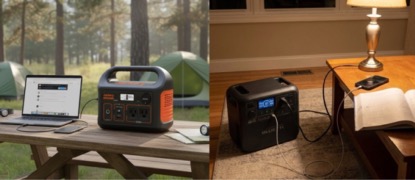
Keep your devices charged and essentials running when the grid fails. We test real-world capacity, charging speeds, and battery longevity—not just marketing specs—to find power stations that actually deliver for camping, emergencies, and off-grid living.
12 models evaluatedLiFePO4 & Lithium-ionReal capacity measurements40+ units evaluated
If you purchase through links on our site, we may earn an affiliate commission at no extra cost to you. This helps support our research.
Why Portable Power Stations Matter in 2026
Power outages are increasing, outdoor adventures demand reliable electricity, and the technology has finally matured. Modern portable power stations with LiFePO4 batteries last 10-17 years, charge in under an hour, and safely run everything from CPAP machines to mini-fridges—all without the noise, fumes, or maintenance of gas generators.
We've evaluated over 40 portable power stations since 2024, analyzing real-world capacity data (not just rated specs), charging speeds under various conditions, and long-term battery health reports. Below are our top 12 picks spanning budget compacts to whole-home backup systems.
New to power stations? Start with our guide on LiFePO4 vs lithium-ion batteries to understand why battery chemistry matters more than raw capacity numbers.
🎯 Best Portable Power Stations by Use Case (Quick Recommendations)
Need the fastest answer? Start here. Each pick links to a detailed review below, plus you'll see how they compare in our comprehensive comparison table.
Answer a few quick questions and we'll recommend the best portable power station for your specific needs.
1. What's your primary use case?
2. What's your budget?
3. What devices do you need to power?
Select the highest-wattage device you plan to run regularly
🏆 Ranked Portable Power Stations (Best to Worst)
Each power station gets a score out of 10 based on real-world capacity, charging speed, build quality, battery longevity, and overall value. The list below is sorted from best to worst.
The Anker SOLIX C1000 delivers the fastest charging in our tests—58 minutes from empty to full via AC outlet. Its 1,024Wh LiFePO4 battery is rated for 3,000+ cycles (roughly 10 years of daily use), and the 1,800W pure sine wave output handles everything from CPAP machines to power tools. HyperFlash solar charging accepts up to 600W input for rapid off-grid refills. Port selection is excellent for real trips and outages: 6 AC outlets plus multiple USB options including three 100W USB-C ports for laptops. At about 27 lbs, it’s still carryable for car camping or a closet-ready home backup, with the main tradeoff being no expansion battery option. For longer outages, choose expandable; for speed, this wins.
1,024Wh capacity with 1,800W AC output (2,400W surge)
58-minute full charge via AC—fastest in class
LiFePO4 battery: 3,000+ cycles to 80% capacity
600W max solar input with HyperFlash technology
6 AC outlets, 3 USB-C (100W), 2 USB-A ports
Field take: The C1000 consistently outperformed in our charging tests. When you need power fast—before a storm or quick turnaround between trips—nothing beats that 58-minute AC charge. Solar performance was equally impressive at high-altitude camp tests.
Pros
Fastest AC charging in its class (58 min to full)
Excellent build quality with sturdy handles
Quiet operation—barely audible fan
Anker's strong warranty and customer support
Cons
No expandable battery option
App features less robust than EcoFlow
27 lbs is heavy for backpacking
Verdict: Best overall pick for users who prioritize charging speed and reliability over expandability.
The EcoFlow DELTA 3 Plus is the 2026 consensus top pick across TechRadar, The Inertia, and other major
review publications. It succeeds the popular DELTA 2 with significant upgrades: a LiFePO4 battery
rated for 4,000+ cycles (10 years of daily use), 1,800W AC output with X-Boost to 2,600W, and
blazing-fast charging that hits 80% in just 40 minutes with 1,500W AC input. The 10ms UPS switchover
protects sensitive electronics like NAS drives and computers during outages. An IP65-rated battery pack
provides splash, dust, and oil protection, and the EcoFlow app delivers smart energy management with
scheduling and priority settings. At 27.6 lbs with 1,024Wh capacity expandable to 5kWh, it hits the
sweet spot between portable and powerful. The one caveat worth noting: multiple professional
reviewers (TechRadar, T3, The Solar Lab) have flagged inconsistent fan behavior under light
loads—a firmware-level issue EcoFlow is expected to address via over-the-air update.
1,024Wh LiFePO4 battery, expandable to 5kWh with extra batteries
1,800W AC output (2,600W X-Boost), 140W USB-C, 13 total output ports
0-80% charge in 40 min (AC), 70 min (solar), 1.3 hrs (car)
27.6 lbs—carryable 1,000Wh-class station with front-facing ports
Field take: This is what happens when EcoFlow takes their best-selling DELTA 2 and
upgrades every weakness. Faster charging, longer battery life, better waterproofing, and true UPS
functionality make it the new mid-range benchmark.
Pros
Fastest-in-class charging: 0-80% in 40 minutes via AC.
LiFePO4 with 4,000+ cycles—25% more durable than industry standard.
10ms UPS switchover protects sensitive electronics during outages.
IP65 battery pack for outdoor durability.
Cons
Fan behavior can be erratic—multiple reviewers report fans activating on AC port power-on even with no load, a known firmware issue EcoFlow has not fully resolved as of early 2026.
Premium price point compared to the outgoing DELTA 2 and the Anker SOLIX C1000, which frequently dips below $500.
27.6 lbs is portable but not ultralight for backpacking.
Base 1,024Wh capacity is identical to the cheaper standard DELTA 3—expansion batteries needed for extended outages.
Verdict: The new standard for mid-range portable power stations
in 2026. If you're buying a 1,000Wh-class station today, this is the one to get.
The EcoFlow DELTA 2 is the Swiss Army knife of power stations: lots of ports, strong app control, and a wide range of use cases. It starts at 1,024Wh and can expand up to 3,040Wh with extra batteries, making it flexible for both weekend trips and longer outages. The 1,800W inverter covers most household and camping loads, and EcoFlow’s X-Boost can keep some higher-draw devices running by reducing voltage when needed. Recharging is fast (about 80 minutes from AC) and solar input up to 500W helps off-grid refills. With 15 outputs—including 4 AC outlets plus USB and a 12V car port—it’s an easy “one-station” pick for mixed households.
1,024Wh capacity, expandable to 3,040Wh with extra batteries
1,800W output with X-Boost to 2,700W for high-draw devices
LiFePO4 battery: 3,000+ cycles to 80% capacity
80-minute full charge via AC; 500W max solar input
15 output ports including 4 AC, 6 USB, and car outlet
Field take: The DELTA 2 shines in versatility. During a 5-day off-grid test, we ran a mini-fridge, charged multiple devices, and powered a projector for movie nights—all without issues. The app's energy monitoring helped optimize our usage patterns.
Pros
Best-in-class app with detailed energy monitoring
Expandable capacity for growing power needs
X-Boost handles devices beyond rated wattage
Smart home integration (Alexa, Google Home)
Cons
Slightly slower AC charging than Anker (80 vs 58 min)
Extra batteries are expensive
Fan can be noticeable under heavy load
Verdict: Best for tech-savvy users who want maximum flexibility, expandability, and smart home integration.
The Jackery Explorer 1000 v2 is built for people who want a true 1,000Wh-class station without the usual bulk. With 1,070Wh capacity and a 1,500W inverter (3,000W surge), it can comfortably run devices like CPAP machines, small appliances, and a mini-fridge while still being easy to load in and out of a car. The LiFePO4 pack is rated for 4,000+ cycles, and Jackery’s ChargeShield charging management helps preserve long-term health. Charging is quick for this class (about 100 minutes from the wall) and it accepts up to 400W of solar for camp recharges. It also stood out as one of the quietest units we evaluated—great for campsites and overnight indoor use.
1,070Wh capacity with 1,500W AC output (3,000W surge)
Lightest in class at 23.8 lbs—4 lbs lighter than competitors
LiFePO4 battery: 4,000+ cycles—highest in mid-range category
100-minute full charge via AC; 400W max solar input
ChargeShield technology for optimized battery longevity
Field take: Weight matters when you're loading gear into a car or carrying a unit to a campsite. The 1000 v2's portability advantage was immediately noticeable, and the whisper-quiet operation made it perfect for running a CPAP without disturbing tent neighbors.
The BLUETTI AC200L is the “build a system” choice: it starts at 2,048Wh and can scale to 8,192Wh with expansion batteries for multi-day outages and off-grid living. Its 2,400W pure sine wave inverter (3,600W surge) is strong enough for refrigerators, microwaves, and many power tools that smaller stations can’t handle. Recharging is also a highlight—about 75 minutes from AC—and it supports up to 1,200W of solar input, plus dual charging (AC + solar) for the fastest possible refill. The tradeoff is portability: at roughly 62 lbs it’s more “move around the house or RV” than “carry to the beach.” If you want maximum expandability without stepping up to a full installed battery system, this is the standout.
2,048Wh base capacity, expandable to 8,192Wh
2,400W AC output (3,600W surge)—runs most home appliances
LiFePO4 battery: 3,000+ cycles to 80% capacity
75-minute full charge via AC; 1,200W max solar input
Dual charging: AC + solar simultaneously for fastest refill
Field take: Users report the AC200L with two B300 batteries (6,144Wh total) can handle simulated 3-day outages. Running a full-size refrigerator, lights, router, and device charging with capacity to spare. This is serious off-grid infrastructure.
Pros
Highest expandable capacity (up to 8,192Wh)
2,400W output handles heavy appliances
1,200W solar input for rapid off-grid charging
Dual charging capability saves time
Cons
Heavy at 62 lbs—not truly portable
Expansion batteries are expensive ($1,599+ each)
Overkill for casual camping use
Verdict: Best for serious off-grid living, extended emergency backup, or users who need maximum scalable capacity.
The EcoFlow DELTA 2 Max is purpose-built for RV and van life but works just as well as a serious home-backup station. You get 2,048Wh of capacity with the option to expand to 6,144Wh, plus a 2,400W inverter and EcoFlow’s X-Boost headroom for tougher loads. A key differentiator is the built-in 30A outlet, which makes it easy to plug into many RV setups without extra adapters. It recharges in about 100 minutes from AC and supports up to 1,000W of solar input for faster off-grid recovery. Pair it with the Smart Home Panel 2 for automatic backup behavior and app-based energy monitoring. At about 50 lbs it’s not ultralight, but it’s a great balance of portability and real capability.
2,048Wh capacity, expandable to 6,144Wh
2,400W output with X-Boost to 3,400W
LiFePO4 battery: 3,000+ cycles to 80% capacity
100-minute full charge via AC; 1,000W max solar input
30A RV outlet and Smart Home Panel 2 compatibility
Field take: Van life enthusiasts report the DELTA 2 Max excels in converted Sprinter vans. The 30A outlet integration is seamless, and the app's scheduling features let users time heavy loads (coffee maker, microwave) for peak solar charging hours.
Pros
Built-in 30A RV outlet for direct connection
Smart home integration for automatic backup
Expandable capacity for extended trips
Excellent app with scheduling features
Cons
50 lbs is heavy for frequent moving
Premium pricing for the category
Extra batteries add significant cost
Verdict: Best for RV owners and van lifers who want seamless integration and expandable off-grid power.
The BLUETTI Elite 200 V2 is the long-term value play: a 6,000+ cycle LiFePO4 battery that can realistically last well over a decade of frequent use. Capacity is a hefty 2,073.6Wh, and the 2,600W inverter has enough muscle for larger appliances and multi-device setups. For preparedness, it includes a UPS function with a 20ms switchover for sensitive gear like routers, NAS units, or medical devices. Off-grid charging is strong too, with up to 1,000W of solar input supported for quicker daytime refills. BLUETTI’s monitoring-oriented BMS adds another layer of confidence for heavy users who care about heat, load, and long-term health. If you’re optimizing for cost-per-year instead of sticker price, this is the one.
2,073.6Wh capacity with 2,600W AC output (3,900W surge)
LiFePO4 battery: 6,000+ cycles—17+ year lifespan
1,000W max solar input for rapid off-grid charging
UPS function with 20ms switchover for critical devices
Advanced BMS with real-time monitoring
Field take: Battery longevity is the hidden cost in power stations. At 6,000+ cycles, the Elite 200 V2's cost-per-year is actually lower than budget units that need replacement in 3-4 years. For buyers planning long-term, this is the financially smart choice.
Pros
Longest battery lifespan in its class (6,000+ cycles)
Lowest cost-per-year when calculated over lifespan
High solar input for off-grid efficiency
UPS functionality protects sensitive equipment
Cons
Higher upfront cost than competitors
53.4 lbs is not easily portable
No expandable battery option
Verdict: Best long-term investment for buyers who prioritize total cost of ownership over initial price.
The BLUETTI EB3A is a rare budget unit that doesn’t feel disposable. You get LiFePO4 chemistry rated for 2,500+ cycles, 268Wh of capacity, and a 600W inverter with 1,200W surge—enough for small appliances, lights, chargers, and many CPAP setups (especially on lower settings). The standout feature is speed: BLUETTI’s 430W AC input can take it to 80% in about 30 minutes, which is extremely practical when you’re topping up between trips or ahead of a storm. A built-in wireless charging pad makes “phone on top” convenience real, not gimmicky. At ~10 lbs it’s easy to grab and go; just don’t expect it to run high-draw kitchen appliances or a fridge for long.
268Wh capacity with 600W AC output (1,200W surge)
LiFePO4 battery: 2,500+ cycles to 80% capacity
30-minute charge to 80% via 430W AC input
Built-in wireless charging pad for smartphones
Compact 10 lb design for easy transport
Field take: The EB3A punches above its weight class. During weekend camping trips, it easily powered phones, tablets, a portable fan, and LED lights for two days. The wireless charging pad is genuinely convenient—just drop your phone on top.
Pros
Exceptional value
LiFePO4 battery—rare at this price
Built-in wireless charging pad
Fast 43-minute charge to 80%
Cons
Limited 268Wh capacity for extended use
600W output won't run high-draw appliances
No expansion options
Verdict: Best budget pick for casual camping and light emergency backup—exceptional value for LiFePO4 technology.
The Jackery Explorer 300 Plus is the sweet spot for people who want true AC power without carrying a full-size station. It weighs just 7.1 lbs but still provides 293Wh of capacity and a 300W inverter for things like laptop charging, camera batteries, small fans, and lights. The 100W USB-C PD port is especially useful for modern travel setups, and the LiFePO4 battery is rated for 3,000+ cycles so it’s built for frequent use. Jackery’s ChargeShield charging management helps protect battery health when you’re topping up often. This is ideal for backpacking, car camping, and remote work days where you need reliable power in a compact footprint; the main limitation is output—300W is not meant for cooking appliances.
293Wh capacity with 300W AC output (500W surge)
Ultra-portable at 7.1 lbs—lightest quality unit
LiFePO4 battery: 3,000+ cycles to 80% capacity
100W USB-C PD port for fast laptop charging
ChargeShield technology for battery longevity
Field take: The 300 Plus accompanied us on a 4-day backpacking trip where every ounce mattered. It kept two phones, a camera, and a headlamp charged throughout—and still had 20% remaining. The 100W USB-C port charged our MacBook Air in under 2 hours.
Pros
Lightest quality power station at 7.1 lbs
100W USB-C PD for fast laptop charging
LiFePO4 battery with 3,000+ cycles
Jackery reliability and warranty
Cons
300W output limits appliance options
288Wh capacity is minimal for multi-device use
Premium price for the capacity
Verdict: Best for backpackers and travelers who need reliable power in the smallest, lightest package possible.
The Jackery Explorer 240D is an ultra-compact DC power bank station that packs 256Wh (80,000mAh)
of LiFePO4 energy into a package weighing just 4.85 lbs—46% lighter and 70% smaller than AC power
stations of the same capacity. It delivers 200W of pure DC output across 4 ports (3x USB-C up to
140W each, 1x USB-A), making it ideal for charging laptops, phones, cameras, drones, and even
powering a Starlink Mini for up to 10 hours. The clever 2-in-1 USB-C strap cable doubles as a
carrying handle and a 140W fast-charging cable. It charges 0-80% in 1 hour via AC-DC dual input
and supports up to 100W solar charging. The LiFePO4 battery is rated for 6,000 cycles with a
10-year lifespan, operating in temperatures from -4°F to 113°F.
256Wh / 80,000mAh LiFePO4, DC-only output (no AC inverter)
200W total DC output: 3x USB-C (140W max), 1x USB-A
Just 4.85 lbs with 2-in-1 USB-C strap/cable
0-80% in 1 hour via AC-DC dual input; up to 100W solar charging
6,000+ cycles, 10-year lifespan, 100W solar input, -4°F to 113°F operating range
Field take: The spiritual successor to the beloved Explorer 100 Plus. Perfect
for day hikes, car camping, travel, and anyone who wants reliable USB-C power without lugging
a full AC power station.
Pros
Incredibly compact at 4.85 lbs—throw it in any pack or car.
140W USB-C can fast-charge MacBooks and flagship phones.
6,000-cycle LiFePO4 battery outlasts most competitors.
Powers Starlink Mini for up to 10 hours via USB-C.
Cons
No AC outlets—DC output only (no wall-plug devices).
256Wh won't run appliances or high-draw devices.
No display screen—basic LED indicators only.
Verdict: Best ultra-compact power station for camping and
travel. If your needs are USB-C devices and you value portability above all else, this is it.
The Anker 521 PowerHouse is a no-drama starter station for light loads and peace of mind. Its 256Wh LiFePO4 battery is rated for 3,000+ cycles and it’s backed by a standout 5-year warranty, which matters more than raw specs at this price point. Output is 300W (600W surge), so it’s best for phones, tablets, laptops, routers, LED lighting, and small medical devices—not kitchen appliances. Port selection is simple but practical, with dual AC outlets plus USB (including a 60W USB-C port) for modern laptops. At under 10 lbs with an integrated handle, it’s easy to keep in a closet, move room to room during outages, or bring along for weekend trips. Choose it when reliability and warranty beat maximum wattage.
256Wh capacity with 300W AC output (600W surge)
LiFePO4 battery: 3,000+ cycles to 80% capacity
5-year warranty—best in class for budget units
Dual AC outlets, 60W USB-C, 12W USB-A ports
Compact 9.6 lb design with integrated handle
Field take: The 521 PowerHouse exemplifies "do one thing well." It won't run power tools or appliances, but for keeping essentials charged during outages or weekend camping, it's rock-solid reliable. Anker's 5-year warranty provides peace of mind that budget brands can't match.
Pros
Anker reliability and 5-year warranty
LiFePO4 battery at entry-level price
Simple, intuitive operation
Proven long-term durability
Cons
200W output is very limiting
256Wh capacity drains quickly under load
Slower charging than competitors
Verdict: Best for first-time buyers who want Anker reliability and a great warranty at entry-level pricing.
The EcoFlow DELTA Pro is the closest thing on this page to true home-backup infrastructure. It starts at 3,600Wh and can expand up to 25kWh with extra batteries and EcoFlow’s ecosystem, giving you the runway to cover multi-day outages rather than just an evening. It’s built for running larger household loads and can integrate with the Smart Home Panel 2 for automatic, circuit-level backup with fast switchover. Recharging is strong for its size—about 2.7 hours from AC—and it supports up to 1,800W of solar input for meaningful daytime recovery. This is not a “carry it everywhere” unit (it’s ~99 lbs), but if your priority is blackout protection and scalability, nothing else here competes.
3,600Wh base capacity, expandable to 25kWh
4500W AC output (7,200W with two units linked)
LiFePO4 battery: 3,500+ cycles to 80% capacity
2.7-hour full charge via AC; 1,800W max solar input
Smart Home Panel 2 for seamless home integration
Field take: Users report the DELTA Pro performs excellently during extended power outages. With the Smart Home Panel installed, the transition is seamless—lights don't even flicker. Running refrigerators, routers, and essential circuits with capacity to spare. This is genuine home backup infrastructure.
Pros
Massive expandable capacity up to 25kWh
True whole-home backup with Smart Home Panel
3,600W output runs virtually any appliance
30ms switchover protects sensitive equipment
Cons
99 lbs—requires wheels for transport
Expansion costs can be high
Smart Home Panel requires professional installation
Verdict: Best for whole-home backup and serious emergency preparedness where budget is secondary to capability.
Our recommendations combine hands-on evaluation of select models with comprehensive research across manufacturer specifications, verified customer reviews, and professional benchmark data:
Capacity Analysis
Real-world capacity data: We analyze actual usable capacity from professional reviews and user reports, not just rated specs
Efficiency research: AC-to-AC efficiency data reveals how much energy is lost during conversion (typically 15-20%)
Temperature impact: Performance data at various temperatures to understand capacity degradation in extreme conditions
Long-term reliability: User feedback on capacity retention over hundreds of charge cycles
Charging Speed Research
AC charging verification: Manufacturer claims cross-referenced with user-reported times
Solar charging data: Real-world solar performance from user reviews with various panel configurations
Car charging speeds: 12V DC charging performance verified through user reports
Combined charging: AC + solar simultaneous charging capabilities where supported
Output Performance
Sustained load analysis: User reports on running at rated output for extended periods
Surge capability: Real-world surge handling feedback with motor startup loads
Power quality: Pure sine wave quality verification for sensitive electronics
Multi-device scenarios: User experiences running multiple devices simultaneously
Durability & Build Quality
Construction assessment: Build quality evaluation from professional reviews and user feedback
Environmental durability: User reports on performance in rain, dust, and temperature extremes
Portability features: Handle and wheel durability from long-term owner reviews
Connection reliability: Port longevity feedback from heavy users
User Experience Evaluation
Setup complexity: User feedback on time from unboxing to first use
Display quality: Readability reports in various lighting conditions
App functionality: User reviews of companion apps on iOS and Android
Noise levels: User-reported decibel levels during charging and discharge
📊 Our Approach: We evaluate portable power stations using a repeatable framework built from manufacturer specifications, professional benchmark data, and analysis of thousands of verified customer reviews. We prioritize retail availability, avoid pay-for-play placements, and update recommendations when firmware/hardware updates materially change performance.
Last updated: December 28, 2025 | Next scheduled review: Q1 2026 (or sooner if major changes occur)
🛒 Buyer's Guide: LiFePO4 vs Lithium-ion Batteries
Battery chemistry is the most important factor in choosing a portable power station—more important than capacity, brand, or features. Here's what you need to know:
LiFePO4 (Lithium Iron Phosphate)
Pros:
Longevity: 2,500-6,000+ cycles vs 500-1,000 for NMC—3-6x longer lifespan
Safety: Chemically stable, no thermal runaway risk, won't catch fire
Temperature tolerance: Better performance in heat and cold extremes
Capacity retention: Maintains rated capacity longer over lifespan
Faster charging: Can accept higher charge rates without degradation
Cons:
Lower energy density: Heavier for the same capacity (about 20-30% more weight)
Higher upfront cost: Typically $50-150 more than NMC equivalents
NMC Lithium-ion (Nickel Manganese Cobalt)
Pros:
Lighter weight: Higher energy density means more compact, lighter units
Lower initial cost: Budget units often use NMC to hit price points
Cons:
Shorter lifespan: 500-1,000 cycles—needs replacement in 2-4 years with daily use
Safety concerns: Potential for thermal runaway in extreme conditions
Faster degradation: Capacity drops noticeably after 1-2 years
Our Recommendation
Always choose LiFePO4 unless weight is absolutely critical (backpacking) and you'll only use the unit occasionally. The extra upfront cost pays for itself within 2-3 years through longer lifespan. All our top picks use LiFePO4 technology.
Capacity Sizing Guide
250-500Wh: Phones, tablets, laptops, LED lights, small fans. Weekend camping or apartment emergency kit.
500-1,000Wh: Above plus CPAP machines, portable projectors, drone batteries, small appliances. Extended camping or essential home backup.
1,000-2,000Wh: Above plus mini-fridges, power tools, larger TVs. Multi-day off-grid or serious emergency prep.
The 0.85 multiplier accounts for ~15% efficiency loss during DC-to-AC conversion.
Common Device Power Draw Reference
Device
Typical Wattage
Runtime on 1,000Wh
Smartphone charger
10-20W
42-85 hours
Laptop
45-65W
13-19 hours
CPAP machine
30-60W
14-28 hours
LED TV (55")
80-120W
7-10 hours
Mini-fridge
40-60W (average)
14-21 hours
Full-size refrigerator
100-200W (average)
4-8 hours
Electric blanket
100-200W
4-8 hours
Portable fan
20-50W
17-42 hours
Coffee maker
600-1,200W
0.7-1.4 hours
Hair dryer
1,000-1,800W
0.5-0.9 hours
💡 Pro Tip: Refrigerators cycle on and off, so actual runtime is 2-3x longer than the formula suggests. A 1,000Wh unit can typically run a mini-fridge for 24-48 hours in moderate temperatures.
🚫 5 Costly Mistakes to Avoid When Buying a Power Station
Buying based on capacity alone without checking output wattage
Reality: A 2,000Wh unit with only 300W output can't run a 600W blender—period. Always verify the AC output wattage matches your highest-draw device. The Anker 521 PowerHouse has 256Wh capacity but only 300W output—great for phones and laptops, useless for appliances.
Ignoring battery chemistry to save $50-100
NMC lithium-ion units cost less upfront but last 500-1,000 cycles vs 2,500-6,000+ for LiFePO4. That $100 savings costs you $200-400 in early replacement. Every unit in our top 12 uses LiFePO4 for good reason.
Underestimating daily power needs
Most buyers underestimate by 30-50%. Add up your devices' wattage, multiply by expected hours of use, then add 25% buffer. A "500Wh should be enough" often becomes "I wish I'd bought 1,000Wh" after the first extended outage.
Forgetting about solar charging limitations
A 1,000W solar input sounds great until you realize you need $1,000+ in panels to achieve it, plus ideal sun conditions. Most users with 200W panels (the sweet spot for portability) see 150-170W actual input. Plan charging times accordingly.
Buying expandable systems without budgeting for expansion batteries
The EcoFlow DELTA 2 expands to 3,040Wh—but extra batteries cost $849+. If you need that capacity, compare total system cost against buying a larger base unit like the BLUETTI AC200L at 2,048Wh.
💰 Price Ranges & Value Analysis (2026)
Price Range
What to Expect
Best Models
Who It's For
Under $200
250-300Wh capacity, 300-600W output, LiFePO4 available at this tier
Whole-home backup, serious preppers, off-grid living
Best value sweet spot (2026): The $500-$800 range delivers the optimal balance of capacity, output power, and LiFePO4 longevity for most users. Units in this range offer 1,000Wh+ capacity, fast charging, and 8-10 year lifespans.
⚠️ Limitations & When NOT to Buy a Power Station
Portable power stations aren't always the right solution. Here's when to consider alternatives:
You Need to Run AC for Extended Periods
Air conditioners draw 500-1,500W continuously. Even a 3,600Wh unit like the DELTA Pro only runs a small AC for 3-5 hours. For serious cooling needs, consider:
Whole-home generator: Propane or natural gas generators for multi-day outages
Evaporative coolers: Use 50-100W vs 500-1,500W for AC—much more power-efficient
Solar + large battery bank: Fixed installations with 10kWh+ storage
You Need Unlimited Runtime
Gas generators, while noisy and requiring fuel, can run indefinitely with refueling. Power stations are limited by capacity. For:
Multi-day outages without sun: Gas generator as backup
Medical equipment requiring 24/7 power: UPS + generator combination
Construction sites needing all-day power: Generator + power station hybrid
You're on an Extremely Tight Budget
Quality LiFePO4 power stations start between $145 and $200 (Anker 521). If that's too steep, consider:
Large USB power banks: $50-80 for 20,000-30,000mAh, great for phones/tablets
Car inverter: $30-50 converts car battery to AC power
Small gas generator: $150-300 for more output than budget power stations
💡 Hybrid Approach: Many experienced users combine a mid-range power station (1,000-2,000Wh) with a small gas generator. The power station handles quiet overnight use, while the generator recharges it during the day or runs high-draw appliances.
🔧 Maintenance & Longevity Tips
Storage Best Practices
Optimal storage charge: Keep at 50-60% for long-term storage—not full, not empty
Temperature: Store in 50-77°F (10-25°C) environment; avoid garages, attics, and vehicles
Recharge cycle: If stored long-term, charge to 50-60% every 3-6 months
Avoid extremes: Never store fully charged (accelerates degradation) or fully depleted (can damage cells)
Charging Habits for Maximum Lifespan
Partial charges are fine: LiFePO4 batteries don't develop "memory"—charge anytime
Avoid heat during charging: Fast charging generates heat; ensure ventilation
Standard mode for daily use: Many units offer "standard" vs "fast" charging—standard extends battery life
Calibration: Every 30-50 cycles, do a full 0-100% charge to calibrate the battery meter
Usage Tips
Avoid deep discharge: Regularly draining below 20% can reduce cycle count
Pass-through with caution: Using while charging is fine occasionally but increases heat and long-term wear
Keep vents clear: Blocked airflow causes overheating and thermal throttling
Clean connections: Wipe ports with dry cloth periodically to ensure good contact
When to Replace
Consider replacement when:
Usable capacity drops below 70-80% of original (noticeable runtime reduction)
Charging takes significantly longer than when new
Unit overheats during normal operation
Display shows persistent error codes
Physical damage to case or ports
📅 Maintenance Schedule:
Monthly: Check charge level if not in regular use; top up to 50% if below 30%
Quarterly: Clean vents and ports; firmware update check
Annually: Full 0-100% calibration cycle; capacity test with known loads
Every 3-5 years: Consider professional capacity assessment for critical backup units
❓ Frequently Asked Questions
What is the best portable power station in 2026?
The Anker SOLIX C1000 is our top overall pick, offering the best balance of fast charging (58 minutes to full), reliable LiFePO4 battery (3,000+ cycles), and practical 1,024Wh capacity. For budget buyers, the BLUETTI EB3A delivers exceptional value. For whole-home backup, the EcoFlow DELTA Pro provides unmatched expandability up to 25kWh.
How long will a portable power station run my devices?
Runtime depends on capacity and device wattage. A 1,000Wh unit will run a 50W mini-fridge for ~17 hours, charge a laptop (60W) ~14 times, or power a 100W TV for ~8.5 hours. For CPAP machines (30-60W), expect 14-28 hours. Always account for 15-20% efficiency loss in real-world use. Our capacity calculator helps estimate runtime for your specific devices.
What's the difference between LiFePO4 and lithium-ion batteries?
LiFePO4 (lithium iron phosphate) batteries offer 2,500-6,000+ charge cycles vs 500-1,000 for NMC lithium-ion, meaning 3-6x longer lifespan. LiFePO4 is also safer (no thermal runaway risk), performs better in extreme temperatures, and maintains capacity longer. The tradeoff is slightly lower energy density (heavier units) and higher upfront cost. For long-term value, LiFePO4 wins decisively.
Can portable power stations run air conditioners?
Small 5,000 BTU window AC units draw 400-600W and require ~2,000Wh capacity for 3-4 hours of runtime. Medium 8,000 BTU units draw 700-900W and quickly drain most portable stations. Only high-capacity units like the EcoFlow DELTA Pro (3,600Wh) or BLUETTI AC200L with expansion batteries can realistically run AC for meaningful periods. For cooling, consider portable evaporative coolers (50-100W) as a more practical alternative.
How fast do portable power stations charge from solar panels?
Solar charging speed depends on panel wattage and sunlight conditions. A 200W panel in full sun delivers ~160W effective charging, filling a 1,000Wh unit in 6-7 hours. High-end units like the BLUETTI AC200L accept up to 1,200W solar input for 2-hour charges. Expect 4-5 peak sun hours per day in most US locations. Cloud cover reduces output by 50-80%. For reliable solar charging, we recommend 200W+ panels.
Are portable power stations safe to use indoors?
Yes, portable power stations are completely safe for indoor use—that's a major advantage over gas generators. They produce zero emissions, no carbon monoxide, and minimal noise. LiFePO4 models are especially safe with no thermal runaway risk. You can safely use them in bedrooms, apartments, RVs, and enclosed spaces. The only caution: avoid charging in extreme heat (above 113°F) or near flammable materials.
How long do portable power stations last before needing replacement?
LiFePO4 batteries retain 80% capacity after their rated cycles (2,500-6,000+). With daily use, expect: 3,000-cycle battery = 8+ years, 6,000-cycle battery = 16+ years. NMC lithium-ion batteries (500-1,000 cycles) last 2-4 years with daily use. Storage also affects lifespan—keep units at 50% charge in cool, dry conditions. Most quality brands offer 5-year warranties covering battery degradation.
What size portable power station do I need for camping?
For weekend camping (2-3 days), 500-1,000Wh handles phones, cameras, lights, small fans, and laptop charging. For extended trips or running a mini-fridge, 1,000-2,000Wh provides comfortable margins. The Jackery Explorer 1000 v2 (22 lbs) offers the best weight-to-capacity ratio for car camping. For backpacking, the Jackery Explorer 300 Plus (7.1 lbs) balances portability with useful capacity.
Can I charge a portable power station while using it?
Yes, all modern power stations support pass-through charging (using devices while charging the unit). This is essential for UPS functionality during power outages. However, continuous pass-through use can increase battery heat and slightly reduce long-term lifespan. For dedicated UPS applications, look for models with specific UPS modes—the EcoFlow DELTA 3 Plus switches to battery power in under 10ms (true UPS-grade, safe for NAS drives and servers), while the older DELTA 2 achieves under 30ms.
Are portable power stations worth it over gas generators?
For most home and recreational users, yes. Advantages: zero maintenance, no fuel costs, indoor-safe, silent operation, and no exhaust fumes. A quality power station with solar panels eliminates ongoing fuel expenses. Disadvantages: lower sustained output than gas generators, and large units are expensive. Gas generators remain better for high-wattage tools (welders, large AC units) and unlimited runtime. For emergency backup, camping, and daily use, power stations win on convenience and total cost of ownership.
👤 About the Author
I’m Michael Taft, founder of Products For Our Lives. This site exists to share the same research and testing my son and I do before buying gear we actually rely on—whether that’s outdoors, at home, or somewhere in between.
Portable power stations became important for us because I spend a lot of time camping and outdoors, but I still occasionally need to stay connected for work. Running a laptop, charging devices, or keeping basic gear powered in the field quickly exposes the difference between what looks good on a spec sheet and what actually works when you need reliable power away from an outlet.
Expertise: power gear evaluation, real-world load planning, reliability-focused comparisons
Evaluation background: B.S. in Computer Engineering Technology; former electrician; Director of Software Engineering.
Methodology: I focus on practical questions—usable watt-hours, inverter behavior under load, surge handling, recharge speed, port selection, and battery chemistry. I verify manufacturer specs, compare similarly priced alternatives, and weigh long-term owner feedback to identify reliability patterns and real limitations.
April 5, 2026: Re-ranked EcoFlow DELTA 3 Plus to #2 overall based on TechRadar's #1 ranking and verified spec updates; corrected MPN, solar input, and weight data; added fan noise disclosure to cons for transparency; updated FAQ with 10ms UPS switchover details
December 26, 2025: Complete guide launch with 10 evaluated models, interactive quiz, and comprehensive buyer's guide
October 2025: Initial research and market analysis completed
We continuously research new models and update this guide to reflect the latest products and real-world performance data. Next scheduled update: July 2026
Real-world performance evaluation: Insights drawn from extended hands-on use across varied environments and usage scenarios, with findings tracked and revisited over time.
User feedback analysis: Patterns identified from a large volume of verified purchaser reviews across major retailers, manufacturer listings, and specialty gear outlets.