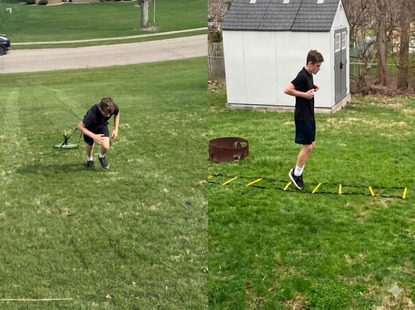
Build explosive speed, sharpen agility, and develop game-ready power with the right training equipment. We evaluated sleds, dummies, ladders, nets, and speed tools based on real-world durability, athlete feedback, and value for coaches and players at every level.
10 products testedSleds, Dummies, Ladders & MoreYouth through adultCoach-approved picks
If you purchase through links on our site, we may earn an affiliate commission at no extra cost to you. This
helps support our testing.
Why Dedicated Football Training Equipment Matters
Whether you are a youth coach building fundamentals, a high school athlete chasing a scholarship, or an adult league player staying competitive, the right training equipment accelerates development in ways that bodyweight work alone cannot match. Sleds build the drive-block power that wins at the line of scrimmage. Agility ladders program the fast-twitch footwork that creates separation. Dummies let athletes practice full-speed contact without risking a teammate.
This guide covers every major training category so you can build a complete practice setup without overspending. We prioritize durability, versatility, and honest value across all 10 picks.
Key Insight from Our Evaluation
You do not need to spend $200+ on a sled to get serious training results. The VEVOR sleds in our guide deliver the same push/pull/drag functionality as premium models costing 3-4 times more. The savings are better invested in agility tools and contact equipment to round out a complete training program.
Quick Picks: Best Football Training Equipment by Category
Short on time? Here are our top recommendations after evaluating 20+ football training products in 2025-2026:
Answer a few quick questions and we will recommend the best football training equipment for your specific needs.
1. What's your training focus?
2. What's your budget?
3. Training alone or with a partner/team?
Solo athletes benefit most from self-contained tools. Team setups benefit from contact equipment and shared stations.
Football Training Equipment: In-Depth Reviews
From sleds that build explosive drive power to ladders that sharpen every cut, these 10 products cover the full spectrum of football-specific training. Each pick has been evaluated for build quality, versatility, and real-world value based on owner feedback, specification analysis, and coaching experience.
Premium steel, powder-coated weight sled with a 276 lb capacity and 39 lb base weight. The 5-level adjustable T-handle lets you dial in push height for athletes of different sizes, and it accepts both 1-inch standard and 2-inch Olympic plates. Includes a harness, pulling strap, 3 carabiners, and a spring clip lock. Works on grass, turf, concrete, and carpet.
276 lb weight capacity with 39 lb steel base
5-level adjustable T-handle for push drills
Compatible with 1" standard and 2" Olympic plates
Includes harness, pulling strap, 3 carabiners, spring clip lock
Field take: This sled punches well above its price. The adjustable handle is the key differentiator, letting you do proper push drills in addition to the standard harness drag work. As a youth football coach, I appreciate that the handle adjusts low enough for younger athletes while extending high enough for adults.
Pros
Exceptional value compared to $200+ competitors.
Versatile push, pull, and drag training in one unit.
Adjustable handle fits youth through adult athletes.
Included harness and straps save additional cost.
Cons
Heavy 39 lb base makes transport challenging without a vehicle.
Push handle is difficult to use effectively on grass surfaces.
Verdict: Best mid-range sled for coaches and athletes who want push, pull, and drag versatility without the premium price tag.
A heavy-duty, budget-friendly sled built from premium steel with a powder-coated finish. The 500 lb weight capacity is the highest in our roundup, and the 57.5 lb base provides serious resistance even without added plates. Dimensions come in at 36.4 x 24.3 x 41.3 inches. Accepts both 1-inch and 2-inch plates. The upgraded padded harness features 5mm D-rings for durability.
Massive 500 lb weight capacity, highest in our roundup
57.5 lb steel base provides built-in resistance
Accepts both 1" standard and 2" Olympic plates
Upgraded padded harness with 5mm D-rings
Field take: If raw pulling power is your priority and you do not need a push handle, this sled delivers more capacity for less money. The 57.5 lb base is a workout even before adding plates, which is great for conditioning but makes it harder to transport.
Pros
Massive 500 lb capacity for serious strength training.
Accepts both standard and Olympic plate sizes.
Budget-friendly at under $60.
Cons
Heavy 57.5 lb base severely limits portability.
No adjustable push handle limits drill variety.
Verdict: Best budget sled for athletes focused on harness drag training who want maximum weight capacity at the lowest price.
A compact yet tough blocking pad measuring 26.4 x 18.5 x 7.3 inches at just 3.1 lbs. The high-density foam core (50.6 lbs/m3) absorbs hard hits while the 500 g/m3 tear-proof PVC outer resists rips from cleats, helmets, and shoulder pads. Powder-coated steel grommets reinforce the two handles for years of heavy use.
Ultra-light at 3.1 lbs for easy one-hand holding
High-density foam (50.6 lbs/m3) for safe impact absorption
500 g/m3 tear-proof PVC outer shell
Two reinforced handles with powder-coated steel grommets
Field take: This is the blocking pad I reach for during youth practice. The 3.1 lb weight means even smaller coaches or parent volunteers can hold it steady without arm fatigue, and the tear-proof PVC has held up through multiple seasons. As a former electrician, I appreciate the reinforced grommet construction.
Pros
Ultra-light design reduces holder fatigue during long drills.
Tear-proof PVC withstands cleat and helmet contact.
High-density foam absorbs impact safely for young athletes.
Cons
Smaller size (26.4 inches) does not provide full-body coverage.
Requires a partner to hold during drills.
Verdict: Best blocking pad for coaches who need a lightweight, durable option that protects both the holder and the athlete.
A full-height tackling dummy standing 50.5 inches tall with a 14.4-inch diameter at 8.8 lbs. The high-density foam core is wrapped in heavy-duty PVC for durability against full-speed contact. Three reinforced handles at different heights allow versatile grip positions for the holder, and powder-coated steel grommets prevent handle tear-out.
50.5 inches tall simulates real player height
14.4-inch diameter with 8.8 lb weight
Three reinforced handles at different heights
Heavy-duty PVC outer with high-density foam core
Field take: The 50.5-inch height is what sets this apart. Youth players can practice proper tackling form against a target that actually represents an opposing player's torso, rather than hitting a flat pad that teaches bad habits. The three handle positions make it useful for both partner drills and independent work.
Pros
Tall enough (50.5 inches) to simulate a real player.
Three handles allow versatile drill setups.
Can be used for independent or partner tackling practice.
Cons
Not self-righting after a tackle; must be reset manually.
At 8.8 lbs, may feel too light for advanced adult athletes.
Verdict: Best tackling dummy for teaching proper form with a realistic target height, especially valuable for youth and high school programs.
The best value in our entire roundup. This all-in-one kit includes a 20 ft agility ladder with 12 adjustable rungs (15.7 to 16.5 inch spacing), 4 adjustable-height hurdles, 12 disc cones, 1 resistance parachute, 1 jump rope, 5 resistance bands, 4 metal anchor pegs, a drill guide poster, and a carry bag. Amazon Best Seller with 8,000+ units bought per month.
20 ft ladder with 12 adjustable rungs (15.7"-16.5")
4 adjustable-height hurdles + 12 disc cones
Resistance parachute, jump rope, and 5 resistance bands
Drill guide poster, 4 metal anchor pegs, carry bag
Field take: This set is how I would outfit a first-year youth football program on a tight budget. You get a full speed and agility station for under $40. The ladder rungs are adjustable, the hurdles work for multiple heights, and the included cones handle formation drills. The parachute is basic quality but functional, and the resistance bands add warm-up and rehab value.
Pros
Incredible value: 7+ training tools for under $40.
Adjustable components work for youth through adult.
Amazon Best Seller with 8,000+ bought per month.
Drill poster helps coaches plan structured sessions.
Cons
Parachute is basic quality; not built for heavy daily use.
Ladder straps can tangle during setup.
Hurdles are lightweight plastic; not indestructible.
Verdict: Best overall value in football training equipment. If you are buying one product to start training, this is the one.
A premium 10 ft agility ladder with an innovative concertina (accordion) fold design that eliminates the webbing straps found on budget ladders. Hinged rigid plastic side rails with low-profile soft edges prevent ankle rolls, and the extensible ends allow you to connect multiple ladders. Includes a carry bag and ground stakes.
10 ft with concertina/accordion fold; no webbing straps
Hinged rigid plastic side rails, low-profile soft edges
Extensible ends to connect multiple ladders
Carry bag and ground stakes included
Field take: If you have spent 10 minutes untangling a strap-style ladder in front of your team, you understand why this ladder exists. The accordion fold deploys in seconds and stays flat. SKLZ durability means this will last multiple seasons, and the extensible ends let you chain ladders for longer drills as your program grows.
Pros
Truly tangle-free design saves setup time.
Premium SKLZ durability trusted by pro and collegiate coaches.
Low-profile rungs reduce trip hazard.
Cons
Only 10 ft; shorter than budget 20 ft ladders.
Fixed rung spacing cannot be adjusted.
Approximately 3 times the price of budget ladder alternatives.
Verdict: Best premium agility ladder for coaches who value zero-hassle setup and multi-season durability.
An 8 ft by 8 ft football throwing trainer with 3 target pockets positioned at various heights to simulate different passing windows. The reinforced tubular steel bow-type frame provides stability, and the high-density polyester netting catches and contains balls effectively. Includes 2 ground stakes and a carry case. Sets up in under 60 seconds.
8 ft x 8 ft catching area with 3 target pockets
Reinforced tubular steel bow-type frame
High-density polyester netting
60-second setup; carry case and 2 ground stakes included
Field take: This is the solo QB trainer that actually works. The 3 target pockets sit at different heights, giving you a high corner, mid-level, and low target to hit. The bow-type frame keeps tension without complicated assembly. I recommend pairing this with a radar gun to track throw velocity alongside accuracy.
Pros
3 distinct target pockets simulate real passing windows.
Quick 60-second setup is practical for daily use.
Sturdy steel frame handles repeated impacts.
Portable with included carry case.
Cons
Takedown can be tricky until you learn the fold pattern.
8 x 8 ft footprint requires significant outdoor space.
Verdict: Best quarterback training tool for solo athletes who want to develop accuracy and arm strength without a receiver.
A 56-inch diameter speed resistance parachute delivering 11-33 lbs of progressive resistance. The polyester canopy features built-in mesh panels that prevent the chute from collapsing during acceleration. The 360-degree rotation belt prevents tangling during directional changes, and the adjustable Velcro belt fits waists up to 42 inches. The quick-release buckle enables overspeed training bursts. Weighs approximately 200g total with carry bag.
Quick-release buckle for overspeed training; carry bag included
Field take: At under $15, this is the most affordable way to add resistance sprint training to any program. The quick-release feature is the real value: sprint against resistance, release, and experience overspeed acceleration. This trains the nervous system to fire faster. Wind does affect resistance, so use it on calm days for consistent training.
Pros
Under $15 makes it the best-value speed training tool.
A set of 6 agility hurdles, each standing 6 inches tall. Built from durable composite materials in SKLZ's signature bright yellow for high visibility, even in low-light early morning or evening practices. The stackable design and included carry bag make transport simple. Ideal for speed-focused footwork drills, quick-step patterns, and reactive agility work.
6 hurdles at 6 inches tall for speed-focused footwork
Durable composite materials built for season-long use
Bright yellow for high visibility in all conditions
Stackable design with carry bag included
Field take: The 6-inch height is the sweet spot for speed-focused footwork. It is tall enough to force high knees but low enough that athletes can maintain sprint pace. These pair perfectly with the GHB agility ladder set for a complete footwork station. I use these at every practice.
Pros
SKLZ brand durability lasts multiple seasons.
Perfect 6-inch height for speed-focused footwork drills.
Bright yellow provides excellent visibility in low light.
Stackable and portable with carry bag.
Cons
Only 6 inches tall; not suitable for plyometric jump work.
6-pack may be insufficient for full team drills; may need multiples.
Fixed height; no adjustability.
Verdict: Best footwork hurdles for coaches who prioritize speed development and need equipment that lasts through heavy daily use.
A budget-friendly blocking shield measuring approximately 24 x 16 inches with a durable leather outer secured by solid rivets. The dense foam padding absorbs hits effectively while protecting the holder. Multiple reinforced handles provide versatile grip options for different blocking drill angles.
Approximately 24 x 16 inch blocking surface
Durable leather outer with solid rivet construction
Dense foam padding for effective shock absorption
Multiple reinforced handles for versatile grip positions
Field take: This is a solid budget alternative to the Goalrilla for coaches who need several pads for team drills. The leather-and-rivet construction impressed me from an engineering standpoint. It absorbs impact well and the multiple handles let you angle it for different blocking scenarios. At $33, you can outfit a full drill station for what one premium pad costs.
Pros
Affordable price enables buying multiples for team use.
Solid rivet and leather construction for durability.
Dense foam provides effective shock absorption.
Multi-handle design allows varied grip positions.
Cons
Leather outer may wear faster in wet or muddy conditions.
Sold as a single pad, not as a pair.
Verdict: Best budget blocking shield for coaches who need to outfit a full practice station without breaking the budget.
As a youth football coach and ISSA certified personal trainer, I have learned that the most effective training programs combine multiple equipment categories rather than investing heavily in a single tool. A complete setup covers four training pillars: speed and agility, strength and power, contact technique, and skill development.
Agility ladders, hurdles, and cones form the foundation of footwork development. According to NSCA (National Strength and Conditioning Association) research, ladder drills improve neuromuscular coordination and foot speed when performed as part of a progressive training program. The key is quality of movement over speed, especially for younger athletes learning patterns for the first time.
Speed parachutes add resistance to sprint training, building the explosive acceleration that separates good athletes from great ones. The quick-release feature on the Uyomal Speed Chute enables overspeed training, a technique endorsed by sprint coaches for developing top-end speed.
Strength and Power Equipment
Weighted sleds develop the drive power that wins battles at the line of scrimmage. Both VEVOR sleds in our guide work on multiple surfaces, but the Weight Training Pull Sled is more versatile thanks to its adjustable push handle. My former career as an electrician gave me an eye for build quality, and the powder-coated steel construction on these sleds is solid. The welds are clean and the plates sit securely, which matters when you are loading 200+ lbs.
USA Football recommends progressive resistance training for athletes age 14 and older, starting with lighter loads and focusing on proper technique before adding weight. For younger athletes, the sled base weight alone provides sufficient resistance for conditioning drills.
Contact Equipment
Blocking pads and tackling dummies allow athletes to practice full-speed contact without risking injury to teammates. The Goalrilla Blocking Dummy is ideal for partner drills where a coach or player holds the pad, while the Goalrilla Tackling Dummy simulates an actual player for tackling form work. USA Football's Heads Up Football program emphasizes proper tackling technique as the foundation of player safety, and dedicated contact equipment is essential for teaching these skills.
Skill Development Equipment
The GoSports Throwing Net addresses the challenge every quarterback faces: how to practice accuracy without a receiver. The 3-pocket target system simulates real passing windows. For tracking improvement, pair it with a radar gun or speed sensor to measure throw velocity over time. You can also check out our best fish finders guide if your athletes are as serious about off-season lake time as mine are.
When to Spend More
You coach a team and equipment sees daily use by multiple athletes
You need commercial-grade durability for a school or league program
You are training at a competitive level where equipment quality affects performance
You want tangle-free, zero-hassle setup (SKLZ products justify their premium here)
When to Save Money
You are an individual athlete training 2-3 times per week
You are new to football and exploring which training methods work best for you
Your budget is limited and coverage across training categories matters more than premium quality in one
You are outfitting a youth program where athletes will outgrow equipment quickly
Frequently Asked Questions
What training equipment do NFL players use?
NFL players use a wide range of training equipment including weighted sleds for explosive power, agility ladders and hurdles for footwork, resistance parachutes for sprint training, blocking and tackling dummies for contact technique, and throwing nets for passing accuracy. The specific tools vary by position, but the fundamentals are the same equipment available to consumers at much lower price points.
How heavy should a football training sled be?
The ideal sled weight depends on the athlete. Youth players (under 14) should start with 25-50 lbs total (sled plus plates). High school athletes typically use 50-135 lbs. College and adult athletes can work with 135-300+ lbs. The VEVOR Weight Training Pull Sled at 39 lbs base weight with 276 lb capacity covers most training needs from youth through adult.
Are agility ladders actually effective for football?
Yes, when used correctly. Agility ladders improve foot speed, coordination, and neuromuscular patterns that translate directly to on-field performance. Research from the NSCA supports ladder drills as part of a comprehensive speed and agility program. The key is progressive difficulty and combining ladder work with sport-specific movements rather than treating ladder drills as standalone training.
What is the best football training equipment for youth players?
For youth players (ages 8-14), we recommend starting with an agility ladder set like the GHB Complete Training Set, which includes multiple tools for under $40. Add SKLZ 6-inch hurdles for footwork development and a Goalrilla blocking dummy for safe contact practice. Avoid heavy sleds until athletes have proper form and sufficient strength, typically around age 14-15.
Can I use a football sled on grass?
Yes, both VEVOR sleds in our guide work on grass, turf, concrete, and carpet. On grass, the sled creates more friction which actually increases resistance, providing a tougher workout. For push-style training on grass, the adjustable T-handle on the VEVOR Weight Training Pull Sled works better than flat-base models. Wet grass increases resistance further, so adjust weight accordingly.
How do I set up a solo football training session?
For effective solo training, combine a speed parachute for sprint resistance, an agility ladder for footwork drills, hurdles for plyometric work, and a throwing net for passing practice. The GoSports throwing net is ideal for solo quarterbacks since it catches the ball and lets you practice without a receiver. A sled with a harness also works solo for drag sprints. Budget about 45-60 minutes per session.
What is the difference between a blocking pad and a tackling dummy?
A blocking pad (like the Yes4All or Goalrilla blocking dummy) is a flat, handheld shield held by a training partner to absorb hits during blocking drills. A tackling dummy (like the Goalrilla Tackling Dummy) is a freestanding cylindrical target that simulates a player's torso for tackling practice. Blocking pads are better for technique work with a partner; tackling dummies allow more independent and full-speed contact practice.
How often should football players do agility training?
USA Football and the NSCA recommend 2-3 dedicated speed and agility sessions per week during the off-season, with each session lasting 20-30 minutes. During the season, reduce to 1-2 sessions to avoid overtraining. Always allow 48 hours between intense agility sessions for neuromuscular recovery. Warm up thoroughly before speed work, and focus on quality of movement over quantity of reps.
About the Author
I'm Michael Taft, founder of Products For Our Lives. I coach youth football and hold an ISSA personal training certification, so football training equipment is gear I evaluate both as a reviewer and as someone who uses it on the practice field every week.
My background as a former electrician gives me a practical eye for build quality, weld integrity, and materials that hold up under real-world abuse. When I evaluate a sled, I am looking at the same things I would check on a job site: is this built to last, or is it built to look good in a product photo?
Expertise: Youth football coaching, strength and conditioning, equipment durability assessment
Credentials: ISSA Certified Personal Trainer; B.S. in Computer Engineering Technology; Director of Software Engineering; youth football coach
Methodology: I evaluate training equipment based on build quality, versatility across skill levels, durability under repeated heavy use, and honest value relative to what coaches and athletes actually need. I verify specifications, analyze long-term owner feedback, and test equipment during real practice sessions.