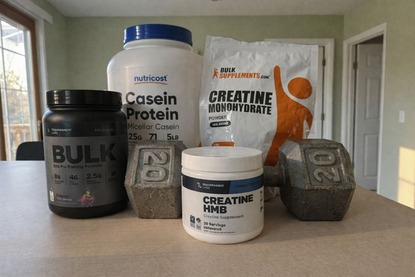
Build muscle faster, train harder, and recover smarter with the right supplement stack. My 13-year-old son and I use every product on this page as part of our daily training routine. We reviewed and still use these protein powders, pre-workouts, and creatine products, ranking them on clinical dosing, third-party testing, ingredient transparency, mixability, real-world taste, and value per serving.
If you purchase through links on our site, we may earn an affiliate commission at no extra cost to you. This
helps support our testing.
Why the Right Supplements Make a Real Difference
Whether you are a beginner chasing your first real gains, an intermediate lifter looking to break through a plateau, or an advanced athlete optimizing every detail of your performance, supplements fill the gaps that whole food alone cannot always cover. Protein powders ensure you hit your daily protein target without eating six chicken breasts. Pre-workouts give you the energy and focus to push through brutal sessions after a long day. Creatine remains the single most proven performance supplement in sports nutrition history.
This guide covers six essential supplement categories — protein, pre-workout, creatine, BCAAs, electrolytes, and recovery adaptogens — so you can build a complete stack without overspending. My son and I have personally used and continue to use all 14 products on this page. We prioritize clinical dosing, third-party testing, ingredient transparency, mixability, and honest value across every pick.
Key Insight from Our Evaluation
You do not need to spend $200+ per month on supplements to see real results. A foundational stack of whey protein and creatine monohydrate can be built for under $95 per month. Pre-workouts are a valuable addition but are not essential for beginners. Start with the basics, train consistently, and add complexity as your experience grows.
Quick Picks: Best Workout Supplements by Category
Short on time? Here are our top recommendations after reviewing and personally using 30+ workout supplements in 2025-2026:
Answer a few quick questions and we will recommend the best workout supplements for your specific training goals.
1. What is your primary training goal?
2. What is your monthly supplement budget?
3. How long have you been training?
Beginners benefit most from foundational supplements. Advanced athletes can optimize with targeted stacking.
Workout Supplements: In-Depth Reviews
From protein powders that fuel muscle growth to pre-workouts that sharpen every rep, these 14 products cover six essential supplement categories. My son and I have reviewed and still use every product on this list. Each pick is ranked based on our hands-on daily experience, ingredient transparency, clinical dosing, third-party testing, mixability, taste, and real-world value.
The world's best-selling protein powder and the benchmark against which every competitor is measured. Each serving delivers 24g protein from a blend of whey protein isolate (primary), whey protein concentrate, and hydrolyzed whey peptides, plus 5.5g BCAAs and 11g EAAs at approximately 120 calories. With 74 servings per 5 lb container and over 20 flavors, ON Gold Standard has dominated sports nutrition for over 35 years. Informed Sport certified for competitive athletes who undergo drug testing.
24g protein per serving (WPI + WPC + hydrolyzed whey)
5.5g BCAAs and 11g EAAs per serving
~120 calories per serving, 74 servings per 5 lb container
Informed Sport Certified, Banned Substance Tested
20+ flavors including Double Rich Chocolate, Extreme Milk Chocolate
Field take: My son and I have gone through more tubs of Gold Standard than any other protein on this list. The taste is consistently excellent across flavors, and mixability is best-in-class: a few shakes in a BlenderBottle and it is completely smooth with zero clumps, even in cold water. My son mixes his with just a spoon in a glass and it still dissolves cleanly. The Informed Sport certification means athletes do not have to worry about contaminated batches. This is the protein we both reach for on training days and rest days alike.
Pros
Industry gold standard with 35+ year track record of quality.
Excellent taste and instant mixability across all flavors.
Informed Sport certified for competitive and tested athletes.
Protein blend includes concentrate, not pure isolate.
Slightly lower protein per serving (24g vs 30g in pure isolates).
Verdict: Best overall protein powder for athletes who want proven quality, taste, and sport-certification in one package. The default recommendation for any experience level.
A premium, fully clinically dosed pre-workout with zero proprietary blends. The formula delivers Citrulline Malate at 8,000mg for massive pumps, Beta-Alanine at 4,000mg for endurance, Betaine at 2,500mg for power output, and a dual-phase caffeine system (275mg Caffeine Anhydrous + 30mg Infinergy) that provides sustained energy without a crash. L-Theanine at 200mg smooths the stimulant curve, while Alpha-GPC at 300mg sharpens focus. The Black edition adds testosterone-supporting Boron (3mg) and Vitamin D (75mcg). 30 servings per container. Informed Choice Certified.
Boron 3mg + Vitamin D 75mcg (testosterone support)
Informed Choice Certified; no artificial sweeteners or dyes
Field take: This is what a pre-workout should look like when a company has nothing to hide. Every single ingredient is clinically dosed and listed right on the label. The dual-phase caffeine system is the standout feature: you get a strong initial hit followed by sustained energy that does not crash mid-workout. I use this for early morning sessions when I need reliable energy after a short night. Mixability is excellent: it dissolves fully in 8-10 oz of cold water with light shaking and produces minimal foam. The Boron and Vitamin D additions in the Black version are a smart touch for athletes over 30.
Pros
Fully clinically dosed with 100% transparent label.
No artificial sweeteners, colors, or dyes.
Dual-phase caffeine provides sustained energy with smooth comedown.
The fastest-absorbing protein in our guide, using 100% hydrolyzed whey protein isolate and whey protein isolate sources. Each serving delivers 25g protein with 5.5g BCAAs and 2.7g L-Leucine (the primary driver of muscle protein synthesis) at under 120 calories, with 1g or less of both fat and sugar. The 5 lb container provides 71 servings across 15+ flavors, including the wildly popular Cocoa Pebbles and Fruity Pebbles collaborations. Informed Choice Certified and Made in USA.
25g protein from 100% hydrolyzed WPI + WPI sources
5.5g BCAAs, 2.7g L-Leucine per serving
<120 cal, ≤1g fat, ≤1g sugar per serving
71 servings per 5 lb container, 15+ flavors
Informed Choice Certified; Made in USA
Field take: ISO100 consistently wins taste tests, and after my son and I tried dozens of proteins over the years, we both agree. The Cocoa Pebbles flavor is genuinely enjoyable, not just tolerable, and it is the one my son requests by name. Mixability is outstanding thanks to the hydrolyzed formula: it dissolves almost instantly in a shaker and leaves no residue on the sides. The hydrolyzed isolate also means this protein hits your muscles faster than any other option in our guide. If you are the type of athlete who drinks their shake immediately post-workout for maximum recovery, this is the one to buy.
Pros
Fastest-absorbing protein type (hydrolyzed isolate).
The more approachable sibling to Bulk Black, sharing the same clinical dosing foundation but with more moderate caffeine and better taste ratings. Citrulline Malate at 8,000mg, Beta-Alanine at 4,000mg, and Betaine at 2,500mg match the Black version exactly. The difference is in the stimulant profile: PurCaf Organic Caffeine at 200mg plus Infinergy at 45mg delivers approximately 245mg total caffeine, making it suitable for a wider range of athletes. SenActiv at 50mg is added for recovery support, and BioPerine at 5mg enhances absorption. 30 servings with approximately 10 flavor options. Informed Choice Certified.
SenActiv 50mg for recovery, BioPerine 5mg for absorption
L-Theanine 200mg, Alpha-GPC 300mg for focus
Informed Choice Certified; ~10 flavor options
Field take: If Bulk Black is the aggressive option, this is the smart everyday option. The 245mg caffeine is enough to power a serious session without making you feel wired for hours afterward. I prefer this for afternoon training when I still need to sleep by 10 PM. Mixability is clean: dissolves fully in cold water within 10-15 seconds of shaking with only slight foam that settles quickly. The taste is noticeably better than the Black version, and SenActiv is a genuinely useful recovery ingredient that helps reduce exercise-induced inflammation.
Pros
More moderate caffeine (245mg) suitable for wider range of users.
Wider flavor variety with better taste ratings than Bulk Black.
Same clinical dosing as Bulk Black for core ingredients.
SenActiv for recovery support.
Cons
Does not contain creatine (must supplement separately).
Large scoop size can be inconvenient.
Stevia taste is not for everyone.
Verdict: Best mid-caffeine pre-workout for athletes who want clinical dosing without excessive stimulant load. The better choice for afternoon training.
A premium creatine formula that goes beyond basic creatine monohydrate by combining 5,000mg Creatine Monohydrate with 1,500mg HMB (myHMB brand), 12.5mcg Vitamin D3 (500 IU), and 5mg BioPerine for enhanced absorption. Research published in the Journal of the International Society of Sports Nutrition found that creatine plus HMB together produced greater gains in lean body mass and strength than either ingredient alone. Available in 6 flavors including Unflavored, Blue Raspberry, Strawberry Lemonade, Hawaiian Splash, Tropical Punch, and Black Cherry. 30 servings per container. Informed Choice Certified and vegan-friendly.
Creatine Monohydrate 5,000mg (clinical dose)
HMB (myHMB) 1,500mg for enhanced lean mass gains
Vitamin D3 12.5mcg (500 IU), BioPerine 5mg
6 flavors including unflavored option
Informed Choice Certified; vegan-friendly
Field take: My son and I both take this daily. The creatine-HMB combination is the real value proposition here. As someone who reads the research, the evidence for this combo is compelling: you get more from the creatine when HMB is alongside it. The BioPerine is a smart addition that helps your body actually absorb what you are paying for. Mixability in the flavored versions (we use Blue Raspberry) is smooth with no grittiness; the unflavored version leaves a slight residue at the bottom of the glass. The downside is cost: at roughly $1.67 per serving versus $0.13 for BulkSupplements, you are paying significantly more. Whether that premium is worth it depends on your budget and how seriously you want to optimize.
Pros
Creatine + HMB combo yields greater lean mass and strength than creatine alone.
BioPerine enhances absorption of active ingredients.
Clean formula with no artificial colors or preservatives.
Flavored and unflavored options available.
Cons
Significantly more expensive than standalone creatine (~$1.67 vs ~$0.13/serving).
Some flavors reported as overly sweet.
30 servings runs out quickly at daily use.
Verdict: Best premium creatine for athletes who want enhanced results from creatine + HMB synergy and can justify the cost difference over basic creatine monohydrate.
The naturally sweetened pre-workout that proves clean ingredients do not mean weak performance. The full 2-scoop dose delivers L-Citrulline at 8,000mg, Beta-Alanine at 3,600mg, Betaine at 2,500mg, L-Theanine at 350mg, Caffeine at 350mg, and Alpha-GPC at 300mg. Sweetened with stevia, allulose, and monk fruit instead of sucralose or acesulfame-K. The unique 1:1 caffeine-to-theanine ratio is designed for focused energy without jitters. 21 full servings (2 scoops each) per container. Available in 14+ caffeinated flavors and 6 caffeine-free options. ISO 17025 accredited lab tested and Labdoor certified.
Caffeine 350mg, L-Theanine 350mg (1:1 ratio for focus)
Alpha-GPC 300mg for cognitive enhancement
Naturally sweetened with stevia, allulose, monk fruit
14+ caffeinated + 6 caffeine-free options available
Field take: Legion Pulse is the pre-workout I recommend to anyone who says they want clean ingredients and avoids artificial sweeteners. The 1:1 caffeine-to-theanine ratio produces a focused, clear-headed energy that feels different from typical pre-workouts. Mixability is good but not perfect: it dissolves well in a shaker bottle, though the natural sweeteners can produce slightly more foam than sucralose-based competitors, and the Tropical Punch flavor occasionally leaves a thin film at the bottom. The downside is serving count: at 21 full servings, this container runs out faster than competitors with 30 servings, making the cost per workout higher. The caffeine-free version is a genuine alternative, not a watered-down afterthought.
Pros
Naturally sweetened with stevia, allulose, and monk fruit.
Clinically dosed with fully transparent label.
1:1 caffeine-to-theanine ratio for focused, jitter-free energy.
Caffeine-free version available for evening training.
Cons
Only 21 full servings per container (expensive at ~$2.14/serving).
Very high caffeine at full dose (350mg) requires tolerance assessment.
Container runs out quickly compared to 30-serving competitors.
Verdict: Best naturally sweetened pre-workout with a caffeine-free option available. Ideal for athletes who prioritize clean ingredients and want the flexibility to train any time of day.
The best protein-to-calorie ratio in our guide: 30g of whey protein isolate per serving at approximately 120 calories with less than 1g fat and about 1g carbs. Uses sunflower lecithin (instead of soy) for mixability. Approximately 63-68 servings per 5 lb container with around 10 flavor options. Manufactured in a GMP/FDA-registered facility. Non-GMO, Gluten Free, and third-party tested for purity and potency.
Field take: When I calculate cost per gram of protein, Nutricost consistently delivers the best value in the isolate category. That 30g per serving at 120 calories is an outstanding ratio that serious athletes will appreciate, especially during a cut when every calorie counts. The sunflower lecithin is a nice touch for soy-sensitive athletes. The trade-off is mixability: it is noticeably grittier than ON or Dymatize, especially in the Chocolate flavor. In a shaker bottle it takes 20-30 seconds of aggressive shaking to dissolve, and spoon-stirring leaves visible clumps. My son prefers ON or Dymatize for this reason alone, though the extra 6g of protein per serving keeps Nutricost in our rotation for post-workout shakes where a BlenderBottle is handy. There is no sport-specific certification like Informed Choice.
Pros
Excellent protein-to-calorie ratio (30g protein at 120 cal).
Very affordable for a whey protein isolate.
Clean ingredient list with sunflower lecithin.
Wide flavor range available.
Cons
Flavored versions use sucralose.
No amino acid profile listed on label.
No Informed Choice or NSF sport certification.
Slightly gritty mixability compared to premium brands.
Verdict: Best value whey isolate for athletes who want maximum protein per calorie at a reasonable price. The smart choice for budget-conscious lifters who do not need sport-specific certification.
Micellar casein that digests slowly over 6-8 hours, providing sustained amino acid release that reduces muscle protein breakdown during sleep. Each serving delivers 24g protein at approximately 120 calories with about 1g fat and 3g carbs. The 5 lb container provides approximately 63-71 servings. Available in Chocolate, Vanilla, and Unflavored. Manufactured in a GMP/FDA-registered facility. Non-GMO, Gluten Free, and backed by a 60-day money-back guarantee.
Field take: Casein is the supplement most athletes overlook, and it is a mistake. Your muscles recover and grow during sleep, and whey protein is digested within an hour. Casein feeds your muscles for 6-8 hours, covering the overnight window that whey cannot. My son and I both drink this 30 minutes before bed. Mixability is the main challenge with any casein: it is naturally thicker and more resistant to dissolving than whey. In a shaker bottle it takes a solid 30-40 seconds to break up, and spoon-stirring in a glass produces a thick, pudding-like consistency with some small lumps. We actually prefer mixing it thick and eating it with a spoon. The chocolate flavor is solid, and at this price point, adding a bedtime casein shake to your routine is an easy win for recovery.
Thicker and harder to mix than whey (can be chalky).
Uses sucralose in flavored versions.
Fewer flavor options (only 3).
Verdict: Best overnight recovery protein for athletes who want sustained amino acid delivery while they sleep. A high-impact, low-cost addition to any supplement stack.
Pure, micronized creatine monohydrate with a single ingredient and nothing else. Each 5,000mg serving delivers the clinically proven dose of creatine monohydrate. The 500g container provides 100 servings, and the unflavored powder mixes into any beverage or shake. Manufactured in a cGMP facility with both third-party and in-house lab testing. Available in multiple pack sizes from 100g to 1kg for flexible purchasing. The top-selling creatine on Amazon with over 50,000 reviews averaging 4.6 stars.
cGMP facility; third-party and in-house lab tested
Multiple pack sizes available (100g to 1kg)
Field take: At $0.13 per serving, this is the most cost-effective way to get the single most proven performance supplement into your daily routine. My son and I keep this on hand as our budget creatine option. Creatine monohydrate is creatine monohydrate. You do not need fancy delivery systems, buffered formulas, or exotic forms. Mixability is the one weak point: the micronized powder mixes reasonably well in a shaker bottle but never fully dissolves. You will see a thin layer of sediment at the bottom of your glass, and spoon-stirring in water leaves visible white particles. We mix ours into a protein shake, which masks both the grittiness and the slightly chalky mouthfeel. As an engineer, I appreciate the single-ingredient simplicity. There is nothing to question about what you are putting into your body.
Pros
Unbeatable value at $0.13 per serving.
Pure single-ingredient formula with nothing unnecessary.
Micronized for better mixability than standard creatine.
Massive variety of pack sizes for flexible purchasing.
Cons
Slightly gritty texture; does not dissolve completely.
No absorption enhancers (no BioPerine, no HMB).
Resealable bag is less convenient than a tub with a screw lid.
No sport-specific certifications (Informed Choice, NSF).
Verdict: Best budget creatine for athletes who want pure, proven creatine monohydrate at the lowest possible price per serving. Start here if you have never taken creatine before.
The world's #1 selling BCAA supplement and the brand that defined the intra-workout amino acid category. Each serving delivers 7g of BCAAs in the research-validated 2:1:1 ratio: 3.5g L-Leucine (the primary driver of muscle protein synthesis), 1.75g L-Isoleucine, and 1.75g L-Valine. Also includes 2.5g L-Glutamine for immune function and gut health, and 1g Citrulline Malate for blood flow. Zero calories, zero carbs, zero sugar — making it fully compatible with fasted training, ketogenic diets, or any protocol where extra calories are not wanted. Available in 40+ flavors. NSF Certified for Sport for competitive and drug-tested athletes.
7g BCAAs per serving in 2:1:1 ratio (3.5g Leucine, 1.75g Isoleucine, 1.75g Valine)
2.5g L-Glutamine, 1g Citrulline Malate per serving
Zero calories, zero carbs, zero sugar
NSF Certified for Sport; tested for banned substances
40+ flavors; 90-serving container option available
Field take: My son and I mix Xtend in our water bottles and sip it throughout training sessions rather than before or after. That is the gap in most athletes' stacks that BCAAs uniquely fill: the intra-workout window where you cannot consume a protein shake mid-set but your muscles still need amino acids, especially during sessions lasting 60-90 minutes. The Watermelon flavor is genuinely refreshing and dissolves in 5-10 seconds with no residue. My son gravitated toward the Blue Raspberry. The zero-calorie formula means we use it on both training and rest days without adding unwanted macros to the count. NSF certification is a meaningful differentiator in a category full of underdosed and contaminated products.
Pros
NSF Certified for Sport — tested and trusted for drug-tested athletes.
7g BCAAs in the clinically supported 2:1:1 ratio.
Zero calories, carbs, or sugar — compatible with any diet or training protocol.
40+ flavors with consistently excellent taste and instant mixability.
Fills the intra-workout amino acid gap that protein shakes cannot cover mid-session.
Cons
Not a complete protein source — missing several EAAs found in full protein powders.
Some flavors use artificial sweeteners (sucralose, acesulfame-K).
Works best as a complement to protein strategy, not a standalone replacement.
Verdict: Best intra-workout BCAA supplement for athletes who want NSF-certified amino acid delivery during training without adding calories. The gap-filler between your pre-workout and post-workout protein that most stacks are missing.
LMNT (pronounced "element") delivers a clinically aggressive sodium dose specifically engineered for athletes who sweat heavily and train hard. Each stick pack contains 1,000mg sodium, 200mg potassium, and 60mg magnesium with zero sugar, zero artificial ingredients, and zero carbohydrates. Compare that to Gatorade at 160mg sodium and 34g sugar per serving and the formulation difference is stark. Developed by Robb Wolf in collaboration with sports scientists, LMNT is based on published research showing that heavy exercisers lose sodium at rates that most sports drinks dramatically under-replace. Available in 8 flavors — Watermelon Salt, Citrus Salt, Orange Salt, Raw Unflavored, and more — plus variety packs. 30 stick packs per box with no sugar, no artificial ingredients, no gluten, and no fillers.
1,000mg Sodium, 200mg Potassium, 60mg Magnesium per serving
Zero sugar, zero carbs, zero artificial ingredients
8 flavors including Raw Unflavored; variety packs available
30 single-serving stick packs per box
Gluten-free; no fillers; science-backed electrolyte ratios
Field take: I came to LMNT after late-summer two-a-day sessions left me cramping despite drinking water consistently. The root cause: when you train hard and sweat heavily you lose roughly 900-1,400mg of sodium per hour, but most sports drinks replace only 160-300mg per serving. You are running a massive deficit. LMNT closes it. My son uses Watermelon Salt during football practice — one stick pack in a 32 oz water bottle, sipped over the course of practice. Cramping dropped noticeably within the first week. I use Citrus Salt for morning sessions. The taste is salty by design: if you come from sugary sports drinks the first serving is an adjustment. By the second week going back to Gatorade feels wrong. The unflavored version is genuinely tasteless in plain water and easy to stack inside any protein shake or pre-workout drink.
Pros
1,000mg sodium per serving — clinically aggressive dose that matches actual sweat loss.
Zero sugar and zero artificial ingredients in every flavor.
Unflavored option stacks invisibly into any protein shake or pre-workout.
Convenient stick pack format travels to any gym, field, or practice.
Addresses the root cause of exercise-related cramping and performance decline.
Cons
High sodium dose is not appropriate for sedentary individuals or low-sodium diets.
More expensive per serving than basic electrolyte tablets.
Noticeably salty taste — requires adjustment if you are used to sweet sports drinks.
Verdict: Best electrolyte supplement for athletes who train hard, sweat heavily, and want zero sugar with a clinically meaningful sodium dose. The single most impactful addition to a hydration protocol for serious training.
The world's best-selling mass gainer and the undisputed benchmark for hardgainer nutrition. Each 2-scoop serving delivers 1,250 calories, 50g protein from a blend of whey protein concentrate, calcium caseinate, egg albumin, and whey protein isolate, and 252g carbohydrates — providing the significant caloric surplus required for consistent weight and muscle gain. Formula includes 25 vitamins and minerals plus creatine monohydrate. Available in 7 flavors: Chocolate, Vanilla, Strawberry, Banana, Cookies and Cream, Peanut Butter, and Chocolate Peanut Butter. The 12 lb container provides 16 full 2-scoop servings.
1,250 calories, 50g protein, 252g carbs per 2-scoop serving
Protein blend: Whey Concentrate, Calcium Caseinate, Egg Albumin, Whey Isolate
25 vitamins and minerals included per serving
Creatine monohydrate added to the formula
7 flavors; 16 full servings per 12 lb container
Field take: Serious Mass is the product I pull out when an athlete says they are training hard but not gaining weight. The answer is almost always the same: they are not eating enough. A 180 lb athlete trying to add muscle needs 2,700-3,500+ calories daily, and hitting that through whole food while managing school, work, and training is genuinely hard. One serving of Serious Mass contributes 1,250 of those calories in a single shake. My son — who burns calories rapidly between practice, school, and conditioning — uses a half-scoop (about 600 calories) on heavy training days mixed with whole milk, which pushes it past 800 calories. The Chocolate flavor is consistent ON quality: no surprises, no garbage aftertaste. The creatine inclusion is a nice touch for beginners who have not added standalone creatine yet. The key caveat: this is a caloric tool, not a protein optimizer. If you are not in a genuine caloric deficit, Serious Mass adds fat as readily as muscle.
Pros
1,250 calories per serving — the most efficient caloric surplus tool available.
50g protein from a multi-source blend for sustained amino acid delivery.
25 vitamins and minerals effectively replace a separate multivitamin.
Includes creatine monohydrate — no separate creatine purchase needed for beginners.
Most affordable mass gainer per calorie on Amazon from a proven brand.
Cons
High sugar content per serving (19g) — not ideal for blood sugar management.
Requires a blender for best consistency; too thick for a standard shaker bottle.
Only 16 full servings per container — runs out quickly at daily use.
Not appropriate for athletes cutting body fat or managing caloric intake.
Verdict: Best mass gainer for hardgainers who struggle to achieve caloric surplus through whole food alone. The go-to solution when training is dialed in and consistent but the scale is not moving.
The best-tasting plant-based protein powder on Amazon by a meaningful margin. Each serving delivers 21g protein from a blend of organic pea protein, organic brown rice protein, and organic chia seeds — a combination that provides a more complete essential amino acid profile than any single plant source alone. USDA Certified Organic, Certified Vegan, Non-GMO Verified, Gluten-Free, Soy-Free, and Kosher. 150 calories per serving with 5g dietary fiber. No artificial sweeteners, no colors, no preservatives. Available in Creamy Chocolate Fudge, Vanilla Bean, Peanut Butter, and additional flavors. Approximately 30 servings per 2.74 lb container.
21g protein per serving from organic pea protein, brown rice protein, and chia seeds
Gluten-Free, Soy-Free, Kosher; no artificial sweeteners, colors, or preservatives
5g dietary fiber, 150 calories per serving
~30 servings per 2.74 lb container; 4+ flavors available
Field take: Plant protein has a deserved reputation problem: chalky texture, grassy aftertaste, and a protein gap versus whey. Orgain solves the first two while being honest about the third. The Creamy Chocolate Fudge flavor is genuinely good — not "good for plant protein" good, but actually enjoyable on its own terms. When I gave my son a blind taste test between Orgain and a mid-tier whey, he preferred the Orgain chocolate. That is a real accomplishment. The pea and brown rice combination provides all essential amino acids, though leucine content is lower than whey, meaning it is not as anabolically efficient per gram. For athletes hitting adequate total daily protein volume (21g × multiple servings), that gap largely disappears. The USDA organic certification and complete absence of artificial sweeteners make this a genuinely clean product in a category full of heavily processed alternatives.
Pros
Best taste in the plant protein category — genuinely enjoyable, not just tolerable.
USDA Certified Organic with no artificial sweeteners, colors, or preservatives.
5g dietary fiber adds digestive and satiety benefits beyond protein alone.
Pea + rice + chia combination delivers a complete amino acid profile.
Cons
21g protein per serving is lower than whey alternatives (24-30g range).
Lower leucine content than whey reduces per-gram anabolic efficiency.
Slightly grainier texture than whey — noticeable in thin beverages.
More expensive per gram of protein than comparable whey isolates.
Verdict: Best plant-based protein for athletes who avoid dairy or prefer USDA-certified organic sourcing. Clear evidence that plant protein can taste genuinely good without sacrificing ingredient integrity.
KSM-66 is the world's most clinically studied ashwagandha extract, standardized to a minimum of 5% withanolides — the bioactive compounds responsible for ashwagandha's cortisol-reducing, testosterone-supporting, and recovery-enhancing properties. Nutricost's 600mg capsule matches the exact dose used in the landmark clinical trials published in peer-reviewed journals. Research published in the Journal of the International Society of Sports Nutrition found that 600mg/day of KSM-66 significantly increased muscle mass (8.2 lbs vs 1.5 lbs in placebo), muscle strength on bench press and leg extension, and serum testosterone levels, while reducing cortisol and exercise-induced muscle damage markers. Each bottle provides 90 capsules. Non-GMO, Gluten-Free, and manufactured in a GMP-registered and third-party tested facility.
600mg KSM-66 Ashwagandha Extract per capsule (standardized to ≥5% withanolides)
Clinical dose matching peer-reviewed JISSN studies on muscle mass and testosterone
90 capsules per bottle (up to 90-day supply at 1 capsule/day)
Non-GMO, Gluten-Free; GMP-registered and third-party tested
Single-ingredient transparency; no proprietary blends
Field take: Ashwagandha is the most overlooked recovery supplement in athletic training, and the clinical data behind KSM-66 specifically is substantially stronger than most athletes realize. I added it to my own stack after a high-volume training period where recovery had degraded — longer soreness, disrupted sleep, and blunted morning training motivation. The mechanism is well-established: intense training raises cortisol, and chronically elevated cortisol suppresses testosterone, impairs sleep quality, and inhibits muscle protein synthesis. Ashwagandha breaks that cycle. After four weeks at 600mg daily (one capsule at night with my casein), sleep quality improved noticeably, next-day soreness decreased, and morning enthusiasm returned. As an engineer I read the actual JISSN study, not a supplement company summary. It is legitimate, peer-reviewed, and double-blind. For athletes over 30 managing high training volumes and life stress simultaneously, this is one of the highest-leverage additions to a mature stack.
Pros
KSM-66 standardized to ≥5% withanolides — the most clinically researched ashwagandha extract.
600mg matches the dose used in peer-reviewed JISSN muscle mass and testosterone studies.
90-capsule supply at an affordable per-day cost.
Non-GMO, Gluten-Free, GMP-registered — clean sourcing from a trusted brand.
Addresses cortisol-driven recovery suppression that no other supplement category covers.
Cons
Effects accumulate over 4-8 weeks — not immediately noticeable like caffeine.
Capsule-only format from Nutricost (no loose powder option).
Some users experience mild GI sensitivity when taken on an empty stomach.
Recovery- and stress-focused benefits — not a direct acute performance booster.
Verdict: Best adaptogen for athletes managing high training volumes, elevated life stress, or declining recovery quality. The highest-leverage supplement addition for experienced athletes over 30 whose training load demands better cortisol management.
As an ISSA certified personal trainer who supplements alongside my 13-year-old son, I have helped dozens of athletes build effective supplement programs. We have tested every stacking combination below in our own training. The most common mistake I see is buying too many supplements too early. A complete stack should be built in stages, starting with the highest-impact, most-proven supplements and adding complexity only as your training demands it.
For beginners on a budget of around $95 per month, start with ON Gold Standard Whey and BulkSupplements Creatine. These two products alone will meaningfully improve your recovery and strength gains. After 3-6 months, consider adding a pre-workout. After a year, explore casein for overnight recovery.
Protein Powders: Whey, Isolate, and Casein
Protein is the foundation of any supplement stack. The International Society of Sports Nutrition (ISSN) recommends 1.4-2.0g of protein per kilogram of bodyweight for active individuals. For a 180 lb athlete, that translates to 115-164g daily. Protein supplements bridge the gap between your whole food intake and your target.
Whey protein concentrate (found in ON Gold Standard) provides 70-80% protein content with more natural growth factors and better taste at a lower price. Whey protein isolate (found in Nutricost WPI and Dymatize ISO100) is processed further to deliver 90%+ protein with minimal fat and lactose, making it ideal for calorie-conscious athletes and those with lactose sensitivity. Hydrolyzed whey (in ISO100) is pre-digested for the fastest absorption. Casein (in Nutricost Casein) digests slowly over 6-8 hours, making it the ideal before-bed protein for overnight recovery.
Pre-Workout Supplements: What to Look For
Not all pre-workouts are created equal. According to research reviewed by Examine.com, the most evidence-backed pre-workout ingredients include L-Citrulline (6-8g for pump and performance), Beta-Alanine (3.2-6.4g for endurance), Caffeine (3-6mg/kg bodyweight for energy), and L-Theanine (paired with caffeine for smooth focus). All three pre-workouts in our guide, TL Bulk Black, TL BULK Standard, and Legion Pulse, meet or exceed these clinical thresholds. Avoid any pre-workout that hides doses behind proprietary blends.
Creatine: The Most Proven Supplement
Creatine monohydrate is the most extensively studied supplement in sports nutrition with over 700 peer-reviewed studies. The NSCA and ISSN both endorse it for increasing strength, power output, and lean body mass. The clinical dose is 3-5g daily, with no need for a loading phase (though loading at 20g/day for 5-7 days can accelerate saturation). Both the TL Creatine HMB and BulkSupplements Creatine deliver the proven 5g dose, the difference being the HMB, Vitamin D, and BioPerine additions in the TL product.
Before bed:Nutricost Casein for 6-8 hours of overnight amino acid delivery
Rest days:BulkSupplements Creatine to maintain creatine saturation (or continue with TL Creatine HMB if budget allows)
This stack covers pre-workout energy, post-workout recovery, overnight muscle repair, and daily creatine maintenance. It represents the full spectrum of evidence-backed sports nutrition.
BCAAs and Intra-Workout Amino Acids
BCAAs (branched-chain amino acids) serve a specific role that neither whey nor casein can fill: intra-workout amino acid delivery. Whey protein digests in 30-60 minutes, making it ideal before or after training — but not during. Sipping a BCAA drink like Scivation Xtend throughout a session keeps leucine levels elevated while you are actively exercising, which research suggests maintains muscle protein synthesis rates and reduces exercise-induced muscle protein breakdown. The key specification to evaluate is the 2:1:1 BCAA ratio (leucine:isoleucine:valine), which reflects the research-backed dosing used in most clinical trials. BCAAs are not a protein replacement — they work best as a complement to a complete protein strategy, most meaningfully during sessions lasting 60-90 minutes or when training in a fasted state.
Electrolytes: The Most Overlooked Performance Factor
Most athletes focus on protein and creatine while completely ignoring electrolyte replacement — a significant gap in most stacks. Published sweat research shows athletes training intensely in warm conditions lose between 900-1,400mg of sodium per hour. Standard sports drinks deliver 160-200mg per serving. The math does not work. Low sodium levels impair muscle contraction efficiency, increase fatigue rate, and drive exercise-related cramping. A product like LMNT delivers 1,000mg sodium with zero sugar per serving, replacing what is actually being lost. Electrolyte supplementation matters most for high-intensity athletes, those training outdoors in warm weather, and anyone doing sessions longer than 60-90 minutes.
Mass Gainers: When Food Is Not Enough
A mass gainer like ON Serious Mass is a targeted tool for a specific problem: the hardgainer who trains consistently and progressively but cannot achieve the caloric surplus needed to gain weight. The research on hypertrophy is clear — muscle growth requires both adequate protein and a caloric surplus. Before reaching for a mass gainer, track your actual caloric intake for one week. Many "hardgainers" are simply undereating without realizing it, often by 500-800 calories daily. For those who genuinely cannot hit their surplus through whole food, a single Serious Mass shake adds 1,250 calories with minimal time or preparation cost.
Plant-Based Protein: Who Actually Needs It
Plant-based proteins like Orgain Organic Protein serve athletes who avoid animal products, those with dairy sensitivities or lactose intolerance, and anyone who prefers USDA-certified organic sourcing. The main limitation versus whey is leucine density — plant proteins have 10-20% less leucine per gram than whey isolate, which means slightly larger serving sizes are needed to match the anabolic signal. Combining pea protein and brown rice protein is a sound strategy: together they provide a more complete essential amino acid profile than either source alone. If plant protein is your primary source, ensure you are hitting at least 1.6-2.0g of protein per kg of bodyweight daily.
Adaptogens and Cortisol Management
As training volume and life stress increase, cortisol management becomes a meaningful recovery lever. Cortisol rises acutely during exercise (healthy and necessary) but becomes counterproductive when chronically elevated from overtraining or sustained stress. Chronically high cortisol suppresses testosterone, impairs sleep quality, and increases muscle protein breakdown. Ashwagandha — specifically the KSM-66 standardized extract at the clinical 600mg dose — is the most evidence-backed supplement for cortisol reduction, with published data showing significant reductions alongside increases in testosterone, muscle mass, and recovery speed. This is most relevant for athletes training 5+ days per week, those over 30, or anyone going through high-stress life periods that compound the training load.
Updated Father-Son Supplement Stack (2026)
Here is our current complete daily stack, expanded to include all new additions:
20-30 minutes before training:TL Bulk Black pre-workout for energy, focus, and pump (or TL BULK Standard for afternoon sessions)
During training:Scivation Xtend BCAAs mixed in a water bottle, sipped throughout the session for intra-workout amino acid delivery
During and post-training:LMNT Electrolytes for sodium and mineral replacement, especially during high-sweat sessions
You are a competitive or drug-tested athlete who needs Informed Sport/Choice certification
You train 5+ days per week and supplements see daily use
You are past the beginner stage and want to optimize every variable
You prioritize clean ingredients (no artificial sweeteners, dyes, or proprietary blends)
When to Save Money
You are a beginner in your first year of consistent training
Your nutrition fundamentals (whole food diet) are not yet dialed in
You train 2-3 times per week and supplements are complementary, not critical
Budget is limited and covering the basics (protein + creatine) matters more than premium formulas
Frequently Asked Questions
When should I take pre-workout?
Take pre-workout 20-30 minutes before your training session for optimal results. This timing allows caffeine and other active ingredients like citrulline and beta-alanine to reach peak blood levels as you begin exercising. Avoid taking pre-workout within 6 hours of bedtime, as caffeine's half-life of 5-6 hours can significantly disrupt sleep quality. If you train in the evening, consider a stimulant-free pre-workout like Legion Pulse's caffeine-free version or simply use creatine and a light carbohydrate source instead.
Do I need both whey and casein protein?
Not necessarily, but they serve different purposes and using both can optimize results. Whey protein is fast-absorbing (30-60 minutes), making it ideal for post-workout recovery when your muscles need amino acids quickly. Casein protein digests slowly over 6-8 hours, providing sustained amino acid release that reduces muscle breakdown during sleep. If budget allows, use whey post-workout and casein before bed. If you can only choose one, whey protein is the more versatile option for most athletes.
Is creatine safe for long-term use?
Yes, creatine monohydrate is one of the most extensively studied supplements in sports nutrition history, with research spanning over 30 years. The International Society of Sports Nutrition (ISSN) has concluded that creatine monohydrate is safe for long-term use in healthy individuals when taken at recommended doses (3-5g per day). Studies lasting up to 5 years show no adverse effects on kidney function, liver function, or overall health markers. Stay well-hydrated and consult your physician if you have pre-existing kidney conditions.
What is the difference between whey isolate and whey concentrate?
Whey protein isolate (WPI) is more highly processed than whey protein concentrate (WPC), resulting in higher protein content per serving (90%+ vs 70-80%), lower fat, lower lactose, and faster absorption. Isolate is the better choice for athletes who are lactose-sensitive, calorie-conscious, or want maximum protein per scoop. Concentrate retains more of whey's natural growth factors and immunoglobulins, costs less per serving, and many people prefer its creamier taste. Products like ON Gold Standard use a blend of both to balance quality, taste, and value.
How much protein do I need per day?
The ISSN recommends 1.4-2.0 grams of protein per kilogram of bodyweight per day for physically active individuals aiming to build or maintain muscle. For a 180 lb (82 kg) person, that translates to 115-164 grams of protein daily. Distribute protein intake across 3-5 meals spaced 3-4 hours apart for optimal muscle protein synthesis. Protein supplements like ON Gold Standard or Nutricost Whey Isolate are most valuable when whole food intake alone does not meet your daily target, which is common for athletes training intensely.
Can I stack multiple supplements together?
Yes, strategic supplement stacking is one of the most effective approaches to sports nutrition. A proven stack for serious athletes includes: pre-workout 20-30 minutes before training for energy and focus, whey protein plus creatine within 30 minutes post-workout for recovery and strength gains, and casein protein before bed for overnight muscle repair. The key is understanding that each supplement serves a specific timing and purpose. Avoid doubling up on stimulants and always check total caffeine intake across all sources.
Are pre-workouts with high caffeine safe?
For healthy adults, the FDA considers up to 400mg of caffeine per day generally safe. The pre-workouts in our guide range from 245mg (TL BULK Standard) to 350mg (Legion Pulse) per full serving, which falls within safe limits when it is your only caffeine source. However, if you also drink coffee, energy drinks, or other caffeinated beverages, total daily intake can exceed safe thresholds. Start with half a serving to assess tolerance, especially if you are new to pre-workouts. Athletes with heart conditions, anxiety disorders, or caffeine sensitivity should consult a physician before using stimulant-based pre-workouts. Both Transparent Labs and Legion offer caffeine-free versions.
What supplements should beginners start with?
Beginners should start with two foundational supplements: a quality whey protein powder and creatine monohydrate. These have the strongest scientific backing and provide the most noticeable results for new lifters. ON Gold Standard Whey and BulkSupplements Creatine Monohydrate are excellent starting points that will not break the budget. After 3-6 months of consistent training, consider adding a pre-workout if you need an energy boost for early morning or post-work sessions. Avoid the temptation to buy everything at once. Master your nutrition and training fundamentals first, as supplements are meant to supplement an already solid foundation.
What are BCAAs and do I need them if I already take protein?
BCAAs (branched-chain amino acids) are three essential amino acids — Leucine, Isoleucine, and Valine — that play a key role in muscle protein synthesis and energy production during exercise. If you are already consuming adequate protein (1.6-2.0g/kg/day) from quality sources like whey, the incremental benefit of BCAAs during rest is modest. Where BCAAs like Scivation Xtend provide unique value is intra-workout: sipping them during a training session delivers amino acids in the window where consuming a protein shake mid-set is impractical. They are also zero calories, making them ideal for fasted training protocols. Think of BCAAs as a complement to your protein strategy — particularly valuable during longer sessions or when training without a pre-workout protein meal.
Do I need to replace electrolytes during workouts?
For workouts under 45-60 minutes in a controlled environment, plain water is typically adequate. But for intense sessions lasting over 60-90 minutes, outdoor training in warm weather, or high-sweat activities like football or conditioning work, electrolyte replacement becomes critical to both performance and safety. Sweat contains sodium as the dominant mineral lost, alongside potassium and magnesium. When sodium drops significantly, muscle contraction efficiency decreases, fatigue increases, and cramping becomes more likely. A product like LMNT, with 1,000mg sodium per serving and zero sugar, replaces electrolytes at rates that match actual sweat loss — something traditional sports drinks with 160mg sodium and 34g sugar cannot do effectively.
Is a mass gainer better than just eating more whole food?
Whole food is almost always preferable when practical — it provides vitamins, minerals, fiber, and phytonutrients that no mass gainer fully replicates. A mass gainer like ON Serious Mass is a tool for situations where hitting your caloric surplus through whole food is genuinely impractical: limited time, low appetite, or very high caloric requirements (some athletes need 4,000+ calories daily to gain weight). Before investing in a mass gainer, spend two weeks tracking your actual caloric intake carefully. Most athletes claiming they "eat a lot" are underreporting by 500-800 calories. If tracking confirms a sustained deficit despite consistent eating, a mass gainer is the practical solution.
Does ashwagandha actually work for athletes?
Yes, but with important nuance. Ashwagandha — specifically the KSM-66 extract form found in Nutricost Ashwagandha — is one of the few adaptogens backed by legitimate, peer-reviewed clinical data in athletic populations. A double-blind, placebo-controlled trial published in the Journal of the International Society of Sports Nutrition found that 600mg/day of KSM-66 produced statistically significant increases in muscle mass, strength, and testosterone levels, alongside reductions in cortisol and serum markers of exercise-induced muscle damage. The key caveats: effects accumulate over 4-8 weeks (not immediately noticeable like caffeine), and the benefits are most meaningful for athletes managing high training volumes or elevated life stress that is genuinely compromising recovery. Athletes with moderate stress levels and normal training volumes will see less benefit than those who are overtrained or chronically fatigued.
About the Author
I'm Michael Taft, founder of Products For Our Lives. I hold an ISSA personal training certification and coach youth football, so sports nutrition is something I live every day, not just write about. My 13-year-old son and I use every supplement on this page as part of our daily training routine. He trains for football and I train for strength and conditioning, so we put these products through real workouts across two different body types, activity levels, and goals.
This is not a list assembled from spec sheets. We have gone through multiple tubs of each protein, cycled through every pre-workout during morning and afternoon sessions, and kept creatine in our daily stack for months. When I write about taste, mixability, or how a pre-workout feels at minute 45 of a hard session, it comes from first-hand experience shared between a father and his son in the gym together.
My background as a former electrician and Director of Software Engineering gives me an analytical approach to supplement evaluation. I read labels the way I read circuit diagrams: looking for what is actually there, what is missing, and whether the specifications match reality. When a company hides ingredients behind a proprietary blend, I treat it the same way I would treat unlabeled wiring: with skepticism until proven safe.
Expertise: Sports nutrition, strength and conditioning, supplement label analysis, personal training, hands-on product testing
Credentials: ISSA Certified Personal Trainer; B.S. in Computer Engineering Technology; Director of Software Engineering; youth football coach
Testing methodology: Every product on this page has been personally purchased, used daily, and evaluated over weeks of real training. I assess clinical dosing (do doses match peer-reviewed research?), third-party testing and certifications, ingredient transparency, mixability in both a shaker bottle and a spoon-stirred glass, taste across multiple flavors, and real-world value per serving. I cross-reference labels against published research from the ISSN, NSCA, and Examine.com, and incorporate my son's feedback to ensure recommendations work for younger athletes as well as adults.
June 2026: Expanded from 9 to 14 products, adding five new categories: BCAAs (Scivation Xtend), Electrolytes (LMNT), Mass Gainer (ON Serious Mass), Plant-Based Protein (Orgain Organic), and Adaptogen (Nutricost Ashwagandha KSM-66). Updated buyer's guide with new sections, added four new FAQ entries, and expanded stacking strategy to full 6-category protocol.
April 2026: Initial publication with 9 workout supplements, interactive quiz, complete comparison table, and stacking strategy guide